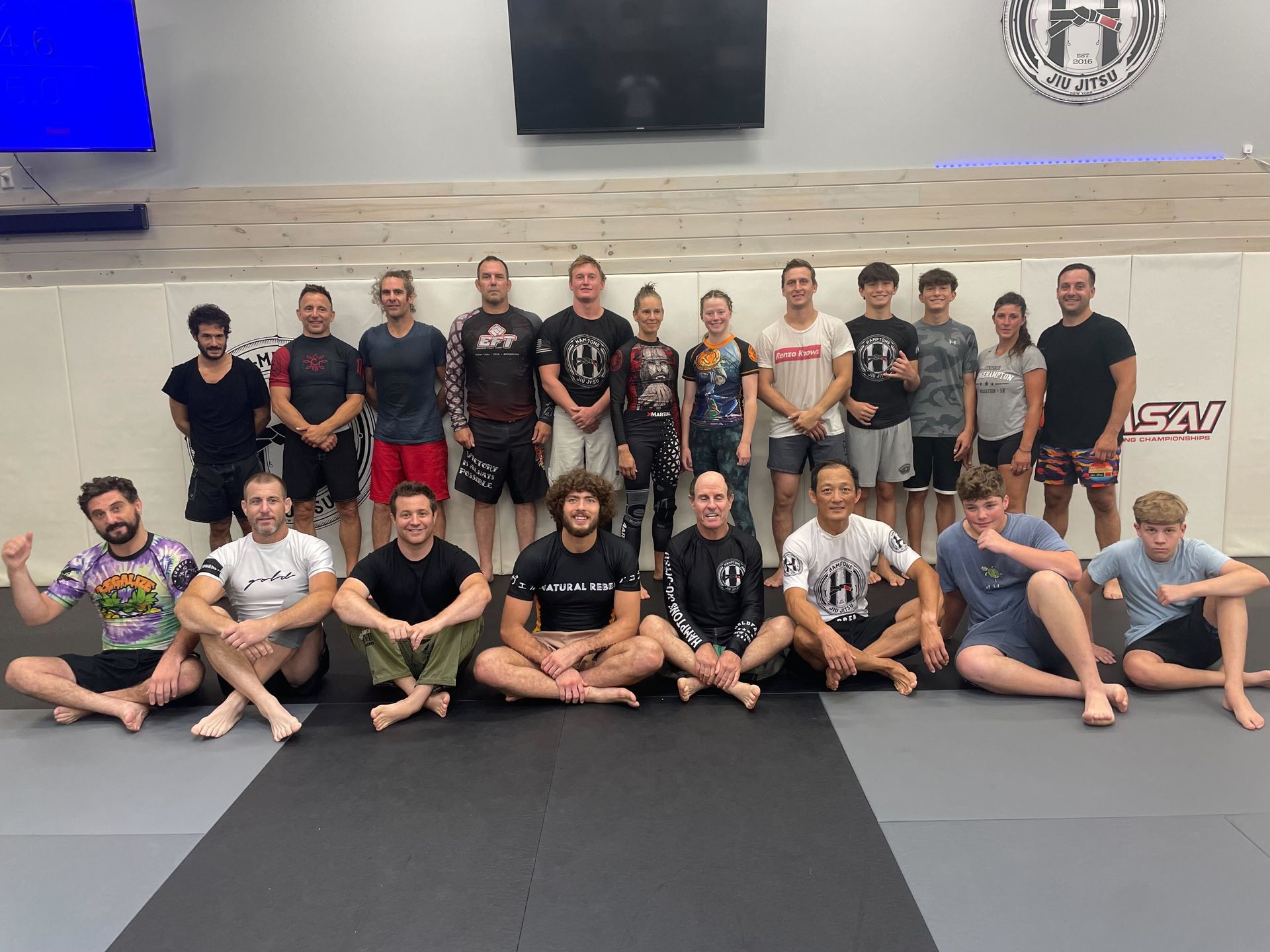

How Youth Jiu Jitsu Builds Focus and Discipline in Young Athletes
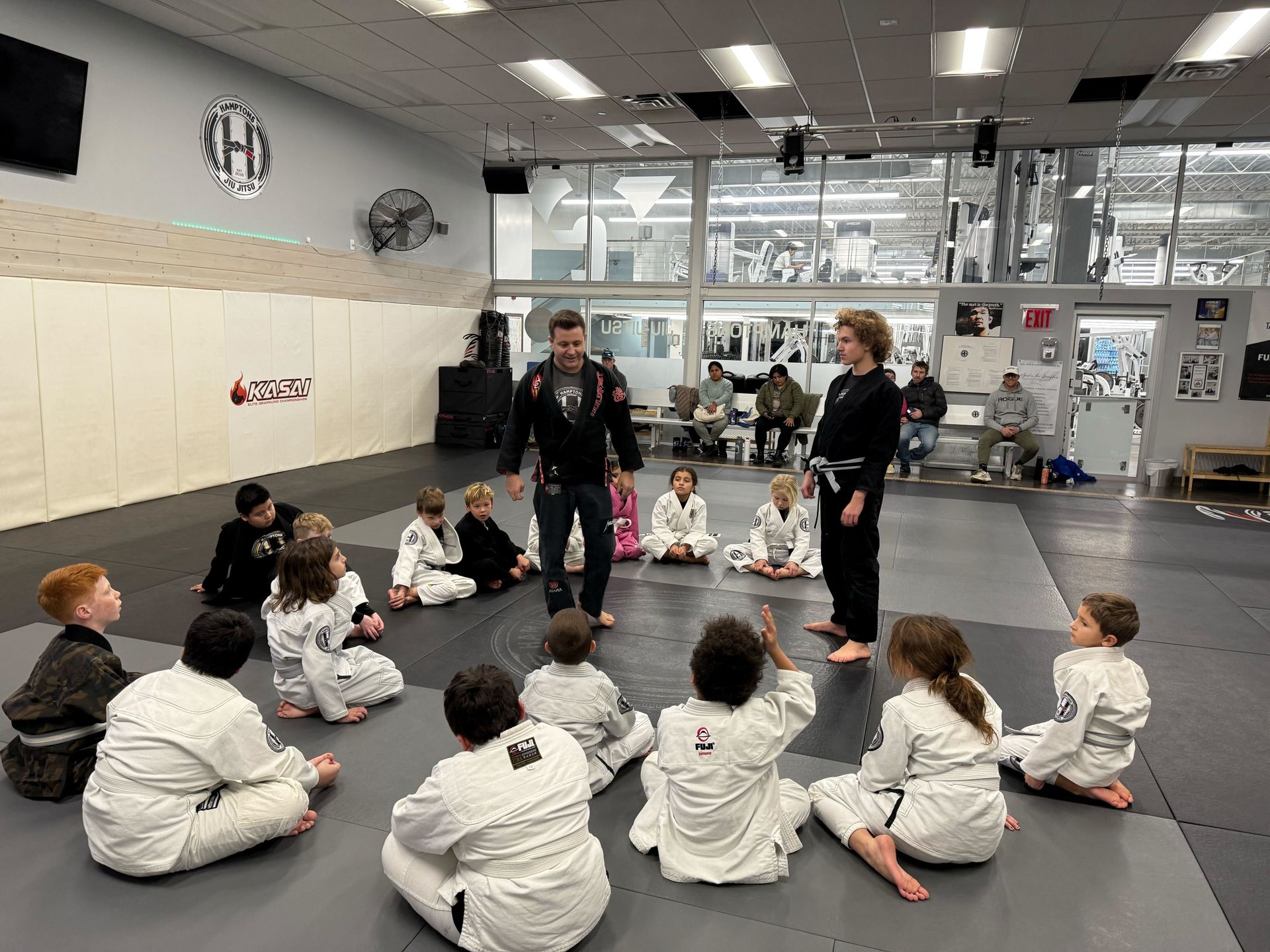
Youth Jiu Jitsu gives kids a place to practice attention, self-control, and effort until those habits start showing up everywhere else.
When parents ask us what changes first in Youth Jiu Jitsu, we usually don’t start with takedowns or submissions. We talk about focus: the ability to listen, try, adjust, and stay with a task even when it’s hard or a little frustrating. In Southampton, NY, that matters because kids juggle a lot, school demands, busy schedules, and the constant pull of screens.
Youth Jiu Jitsu works because it’s structured without being stiff. Every class has a clear start, a clear goal, and a clear expectation: show respect, pay attention, and do the work. Over time, those simple rules create something bigger. Your child learns how to be coachable, how to manage energy, and how to stay disciplined in the middle of challenge.
We also see real-world results that line up with what parents report nationally. In one large survey, parents noted improved concentration in 78.6 percent of children, plus stronger commitment and life-skill carryover like discipline and follow-through. Those numbers feel familiar in our room, because the mat doesn’t reward shortcuts. It rewards consistency.
Why focus and discipline are hard for young athletes right now
A lot of young athletes can “turn it on” for short bursts, then fade. That isn’t a character flaw. It’s often a skills gap: attention hasn’t been trained like a muscle. In a digital age, switching tasks fast is normal. Sticking with one task, especially a challenging one, takes practice.
Discipline can also get confused with punishment. We see discipline as something more useful: doing what needs to be done, even when you don’t feel like it, and staying calm enough to learn. On the mat, kids practice discipline in tiny moments, lining up quickly, keeping hands to themselves, waiting for the signal, resetting after a mistake, and repeating a drill without complaining (well, not too much).
For many kids in Southampton, pressure is real. Academics are competitive, sports are competitive, and social life can feel like a highlight reel. Youth Jiu Jitsu gives kids a grounded routine where effort matters more than status, and progress is measured in what you can do today compared to last month.
The hidden advantage of Youth Jiu Jitsu: attention is part of the skill
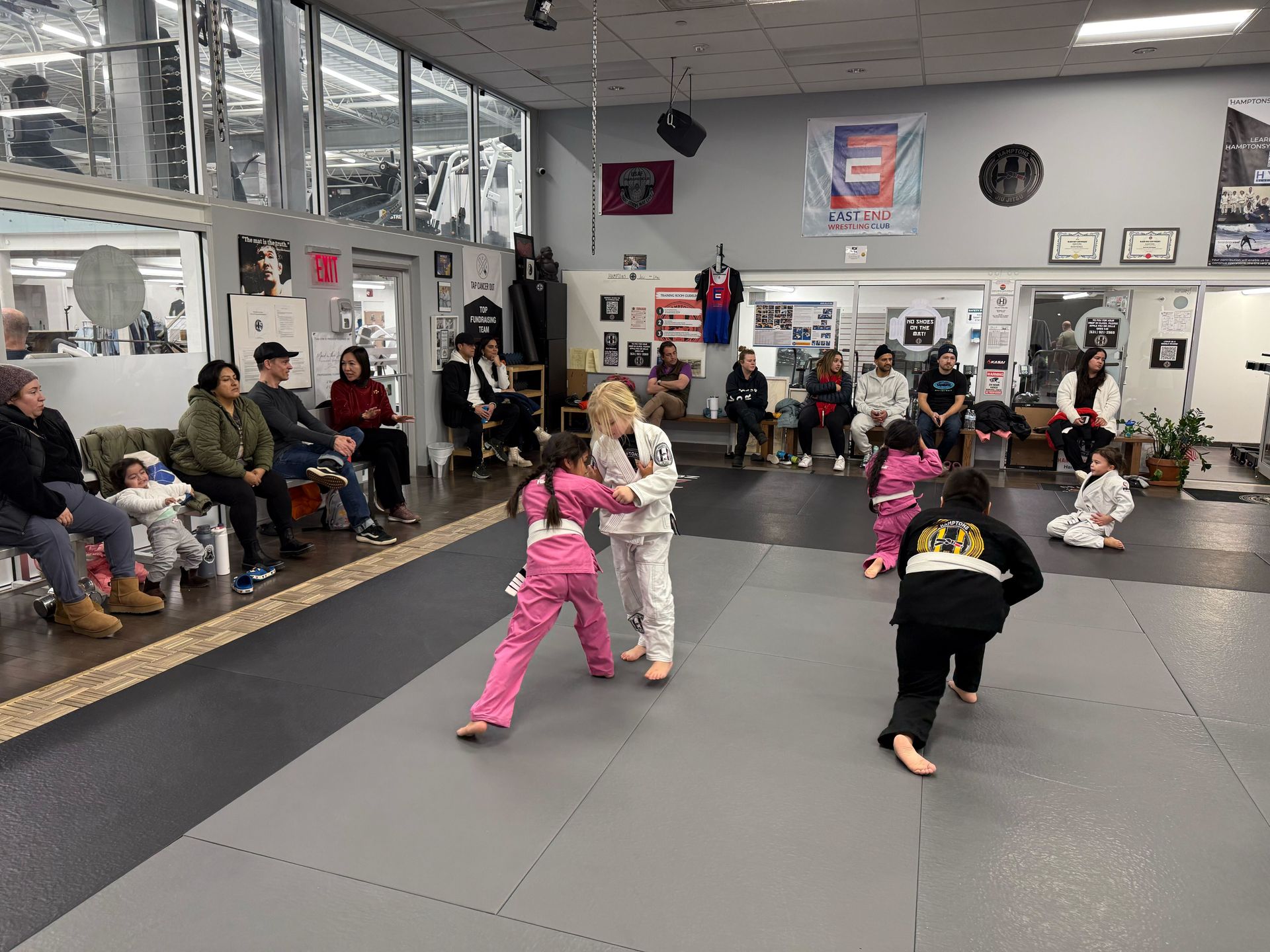
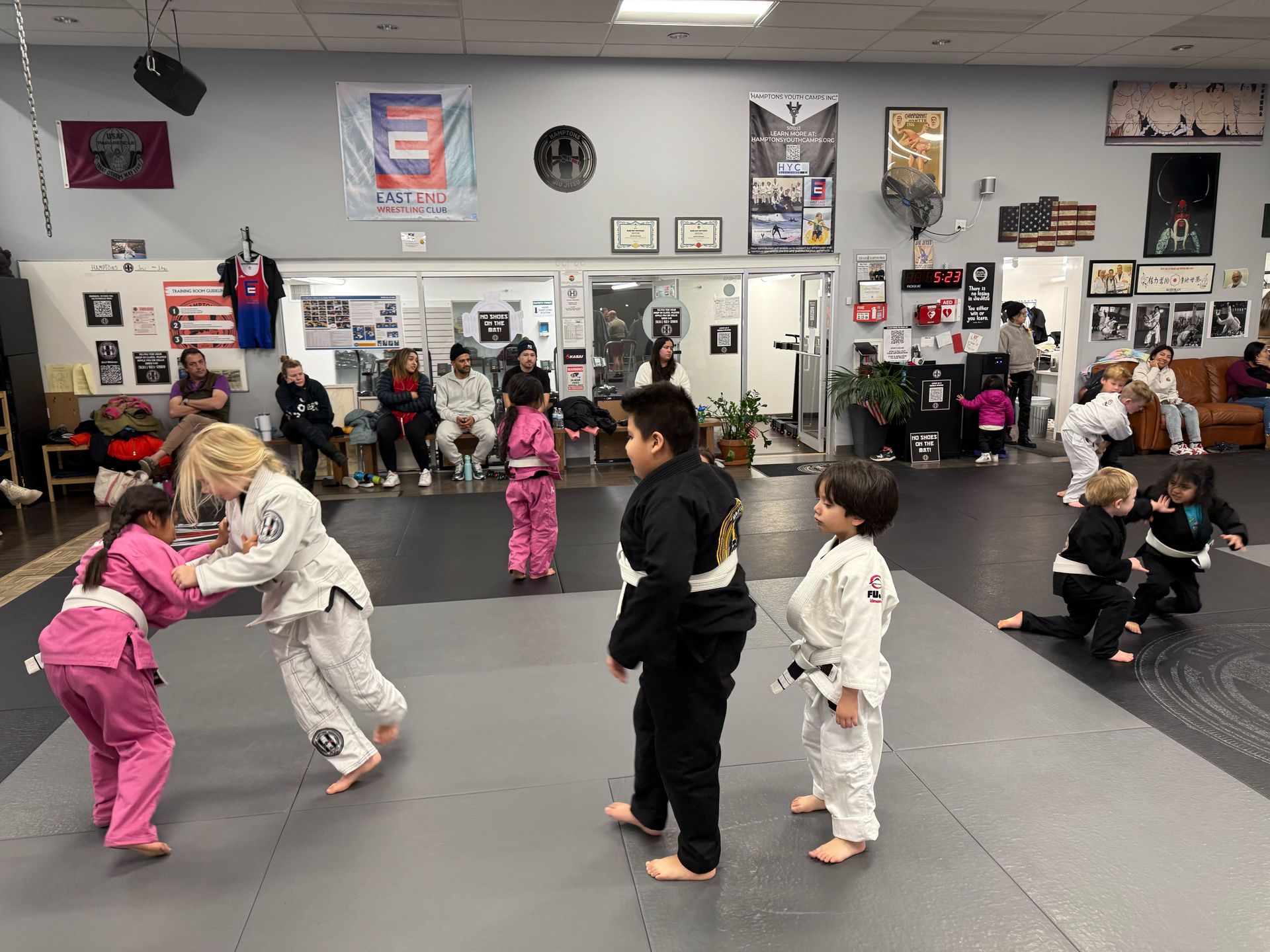
A big reason Youth Jiu Jitsu builds focus is simple: you cannot participate half-heartedly and still succeed. Even beginner drills demand that kids track details, where their hands go, how their hips move, what their partner is doing, and what the instructor just demonstrated.
We teach in a progressive way, so kids aren’t thrown into chaos. We show a technique, explain the purpose, and then build repetitions that let the brain catch up to the body. That repetition is not busywork. It’s the training method that turns “I saw it once” into “I can do it under pressure.”
And because Jiu Jitsu is interactive, attention becomes immediate. If your child stops paying attention, the position changes. If your child listens closely, the solution appears. That quick feedback loop is one reason Youth Jiu Jitsu in Southampton NY can translate into better classroom habits: listen, process, try, adjust.
How our class structure reinforces discipline without lecturing
Kids do not need long speeches about discipline. They need a consistent environment where discipline is the normal way to operate. Our classes follow a rhythm that helps children settle in quickly, even after a long school day.
We reinforce discipline through routines and standards:
- Arriving on time and lining up with purpose
- Listening during instruction and showing respect to partners
- Practicing controlled movement instead of “winning at all costs”
- Accepting correction without melting down
- Finishing what we start, even if it’s not perfect
Over weeks and months, your child learns that discipline is not a mood. It’s a behavior. That’s a big shift for young athletes who are used to relying on hype, adrenaline, or external motivation.
Progressive goals: why belts and skill milestones improve follow-through
Kids respond to clear targets. In Youth Jiu Jitsu, progress is visible and earned. We set expectations around fundamentals first, posture, base, frames, escapes, and positional control. When kids master a piece, we add another layer.
This matters for discipline because it teaches delayed gratification. Your child doesn’t get better from one great day. Your child gets better from showing up, repeating skills, and stacking small wins. That’s the same pattern that supports better study habits, better emotional regulation, and better performance in other sports.
Parents also tell us that the “goal ladder” helps. A child who struggles with follow-through in soccer practice or homework often does better with a system where the next step is clear, and the coach notices details.
The “tap” lesson: learning emotional control without embarrassment
One of the most powerful discipline lessons in Jiu Jitsu is tapping out. Tapping is not failure. It’s communication and safety, and it teaches humility in a healthy way. Kids learn that getting caught is information, not a personal crisis.
That changes how young athletes respond to setbacks. Instead of spiraling, kids learn to reset. We model this constantly: you try, you make a mistake, you learn the fix, you try again. Over time, this builds grit and emotional regulation, two skills that show up everywhere from test-taking to tryouts.
Research and expert commentary often point to this exact mechanism: Jiu Jitsu builds resilience because kids practice losing safely, then recovering quickly. That’s a rare training environment, and it’s a major reason families choose Jiu Jitsu in Southampton NY as a long-term activity.
Focus in motion: why drilling helps kids concentrate longer
Sustained focus is hard when the body is restless. Youth Jiu Jitsu solves that problem by giving kids a job to do with their whole body. Drilling channels energy into a sequence, and sequences require attention.
Our drills also create short, achievable “attention sprints.” A child doesn’t need to focus for an entire hour on day one. We build focus in sets: listen for 60 seconds, perform 10 reps, then switch partners. That pattern trains attention gradually, and kids often surprise themselves with how long they can stay engaged once the structure is clear.
Physical benefits support focus too. As coordination, mobility, and cardiovascular endurance improve, kids fatigue less and pay attention more. When your child can move comfortably, the brain has more bandwidth for problem-solving.
Problem-solving under pressure: sparring as a focus builder
Controlled sparring is where focus becomes real. In sparring, kids can’t “memorize” the answer. They have to recognize what’s happening, choose a response, and commit. That kind of decision-making is the mental side of the sport.
We keep sparring age-appropriate and safety-first, with clear rules and supervision. The goal is not intensity for intensity’s sake. The goal is learning. Your child practices staying calm in the middle of motion, which is exactly what focus looks like in real life.
Parents often notice that after a few months, kids handle frustration better. That aligns with survey data showing reduced anxiety and increased confidence in youth BJJ participants. Confidence, when it’s built through skill, tends to make focus easier because kids stop panicking about mistakes.
Ages and stages: what Youth Jiu Jitsu looks like as kids grow
We tailor training to developmental stages, because a five-year-old and a twelve-year-old need different coaching cues. In general, kids can start learning the foundations around ages four to five, when motor skills and listening skills are ready for structured group instruction. Younger age groups can focus more on coordination, movement, and social skills.
Here’s how focus and discipline typically develop across common age ranges:
1. Ages 4 to 6: learning routines, body control, listening, and basic positions in a playful but structured format
2. Ages 7 to 10: building repetition habits, confidence in escapes, and calmer responses to correction
3. Ages 11 to 13: developing work ethic, problem-solving during sparring, and more personal ownership of goals
4. Teens: practicing resilience, stress management, and mature training etiquette that carries into school and sports
If you’re wondering what age is “best,” we usually say: start when your child can follow simple directions in a group and handle gentle partner work. If you’re unsure, we can help you decide by matching your child to the right class level.
What kids learn that transfers to school and other sports
Youth Jiu Jitsu isn’t just a martial art. It’s a training ground for habits. We see kids apply mat lessons to other parts of life because the same skills repeat: listen, try, adjust, and keep going.
Common carryover skills include:
- Better listening and note-taking because kids practice watching demonstrations carefully
- Stronger self-control because kids must manage intensity and keep partners safe
- More consistent effort because progress requires showing up and repeating fundamentals
- Improved coachability because correction is normal and expected
- Greater confidence in social settings because kids practice teamwork in partner drills
That’s why we often hear about improved school focus, not because we “teach school,” but because Youth Jiu Jitsu teaches the underlying ability to concentrate and persist.
Safety, respect, and the discipline of control
Safety is a discipline skill in itself. We teach kids that control is the point, not aggression. In every class, we set standards for how to move with a partner, how to respect personal space, and how to stop immediately when asked.
Youth Jiu Jitsu is also naturally scalable. Techniques can be practiced slowly, then gradually sped up as kids demonstrate control. Our coaching emphasizes good mechanics, safe tapping, and awareness. And because kids build coordination, flexibility, and body control over time, the risk profile improves as their movement quality improves.
If bullying prevention is part of your concern, Jiu Jitsu supports that too. The real benefit is not that kids learn to fight. It’s that kids carry themselves differently when confidence is real. They also learn empathy by working with partners, not against them.
Making it work with a Southampton schedule
We know families in Southampton run on tight calendars. That’s why consistency matters more than volume. Two classes a week done steadily usually beats sporadic bursts of training followed by long breaks.
We recommend picking class times that feel realistic, not heroic. After-school sessions can be a great “reset” between academics and evening routines. If you travel or have seasonal schedule changes, we can help you build a plan that keeps momentum without pressure.
The most important piece is simple: keep Youth Jiu Jitsu predictable enough that your child doesn’t have to debate it every week. Routine is where discipline grows.
Ready to Begin
Building focus and discipline is rarely about one big breakthrough. It’s about repeated practice in an environment that expects your best and supports your learning when you fall short. That’s exactly what we aim to provide, and it’s why Youth Jiu Jitsu becomes such a steady anchor for so many young athletes.
If you want a program in Southampton, NY that develops attention, resilience, and real confidence through structured training, we’d love to welcome your family to Hamptons Jiu-Jitsu and help you use the class schedule to get started at a pace that fits.
Develop confidence, discipline, and real self-defense skills through martial arts classes at Hamptons Jiu-Jitsu.
ACCESS OUR SCHEDULE
& EXCLUSIVE WEB SPECIAL
Secure your spot and get started today with our EXCLUSIVE offer!