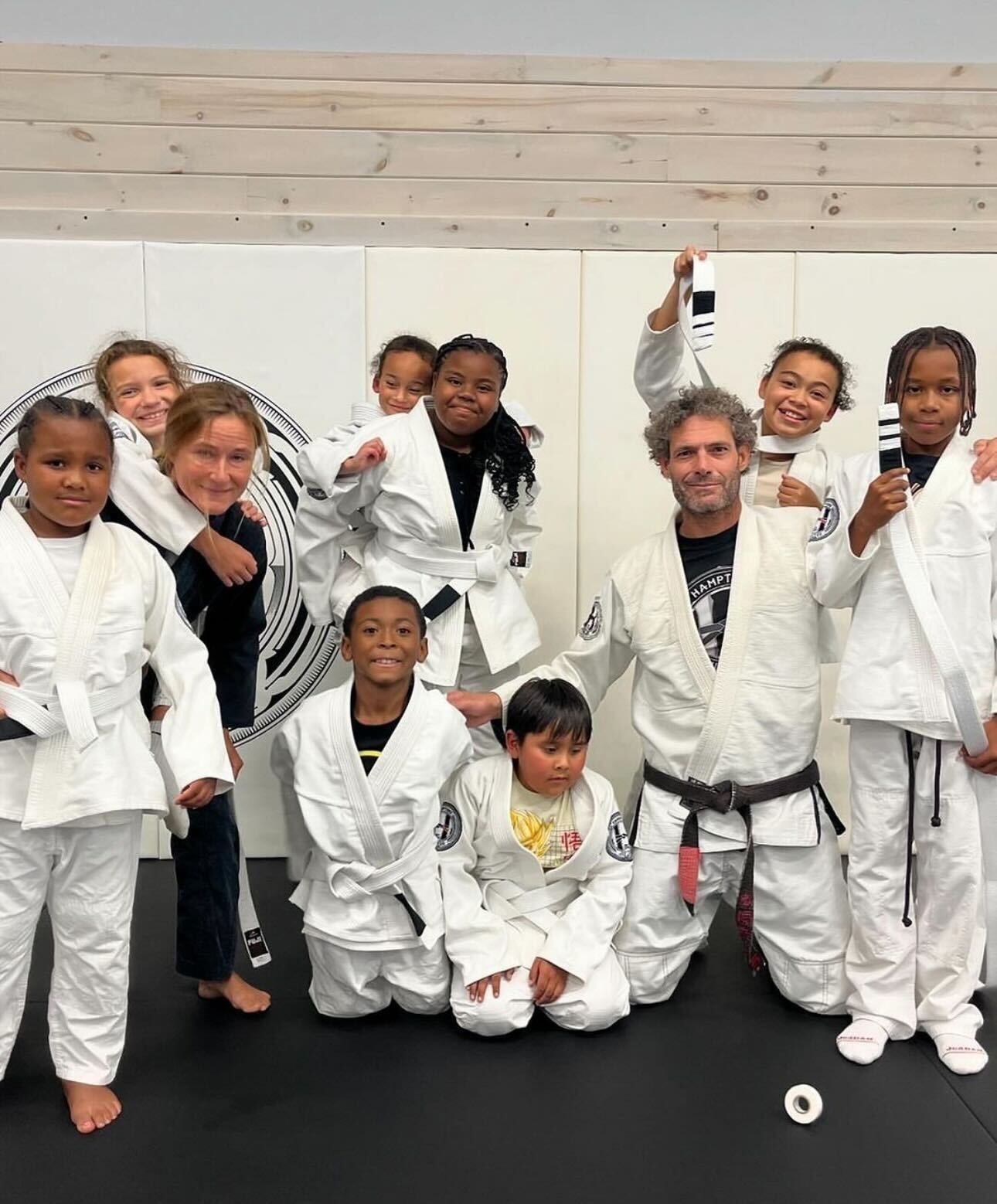

How Youth Jiu Jitsu Helps Kids Overcome Challenges and Thrive
Youth Brazilian Jiu-Jitsu gives kids a practical way to build confidence, manage stress, and feel capable in everyday life.
When parents look into youth jiu jitsu, the first question is usually simple: will this actually help my kid outside the mats? Our answer is yes, and not in a vague, motivational-poster way. Consistent training gives kids repeatable tools for handling pressure, social challenges, and big emotions, while also improving fitness and coordination in a structured setting.
What makes youth jiu jitsu especially powerful is that progress is personal. Kids do not need to be the fastest runner or the loudest voice in the room to succeed. In class, your child learns how to solve problems with technique, patience, and steady effort, and those habits tend to follow kids into school, friendships, and home routines.
Research lines up with what we see week after week. Parent-reported outcomes in youth Brazilian Jiu-Jitsu include a 96.4% improvement in confidence, an 87.5% reduction in anxiety, a 92.8% stronger commitment to goals, and a 100% reported sense of community. Those numbers matter because they reflect real changes families notice, not just what kids can do during class.
Why youth jiu jitsu works when kids feel stuck
Some activities mainly reward natural athleticism or a certain personality type. Youth jiu jitsu rewards learning. If your child is shy, anxious, easily frustrated, or simply overwhelmed by the pace of modern life, the structure of training can be a relief. There is a clear beginning, middle, and end to each class, and kids can measure progress in tangible ways.
In grappling, we teach kids to slow down and think. Instead of panicking when something feels hard, we guide kids to breathe, frame, move step by step, and try again. That is a small thing in the moment, but it adds up. Over time, kids start to trust that discomfort is temporary and solvable.
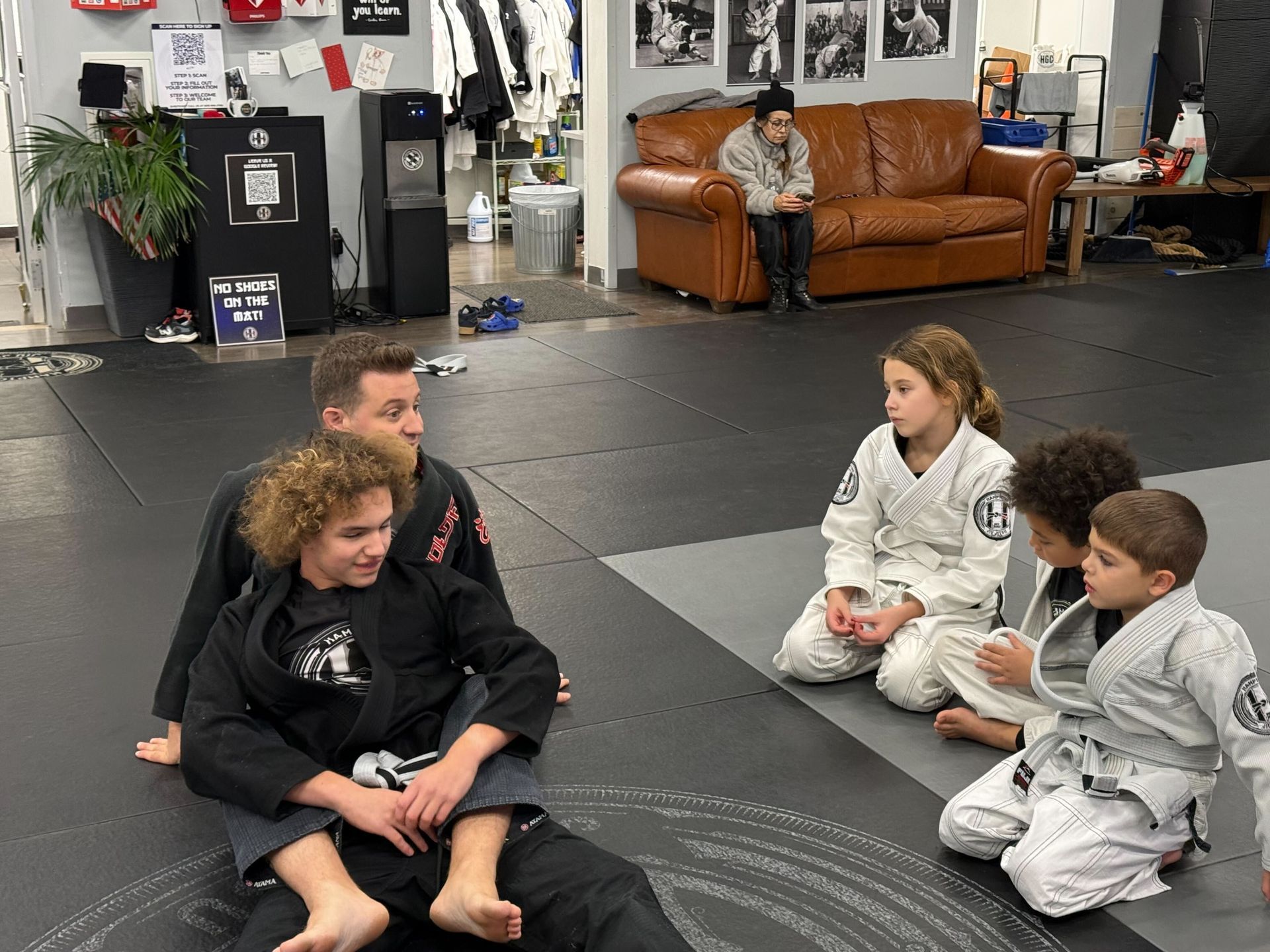
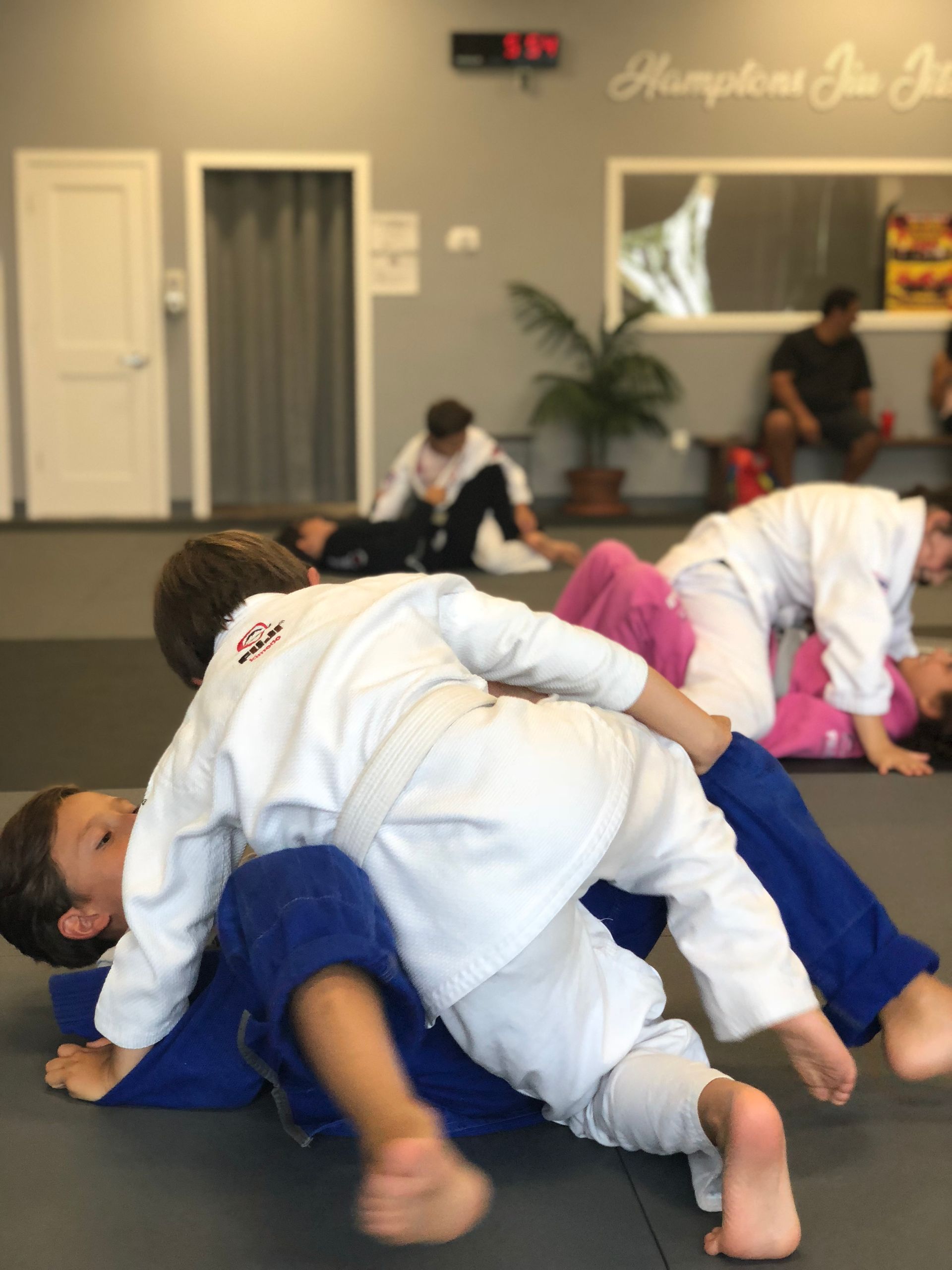
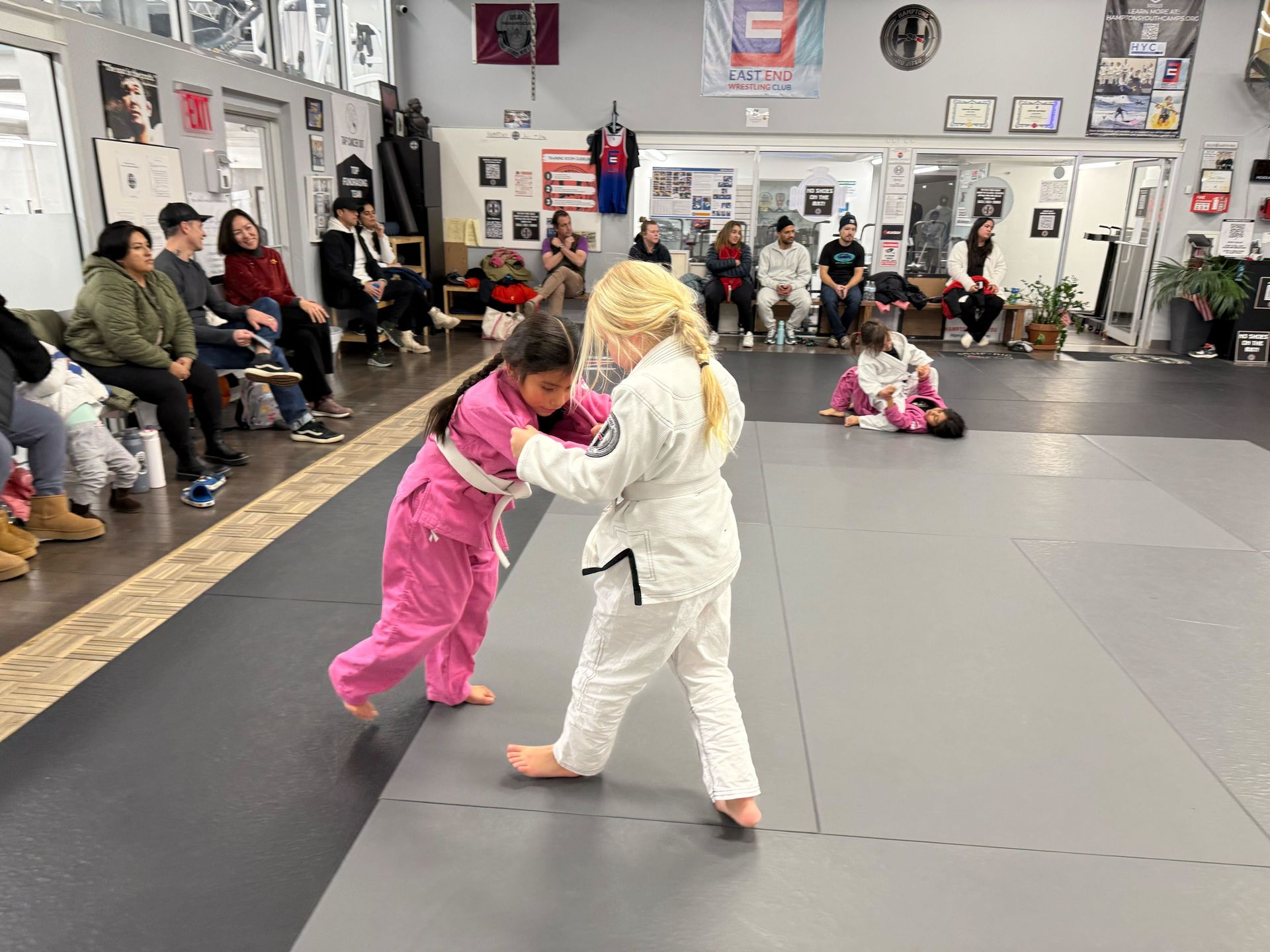
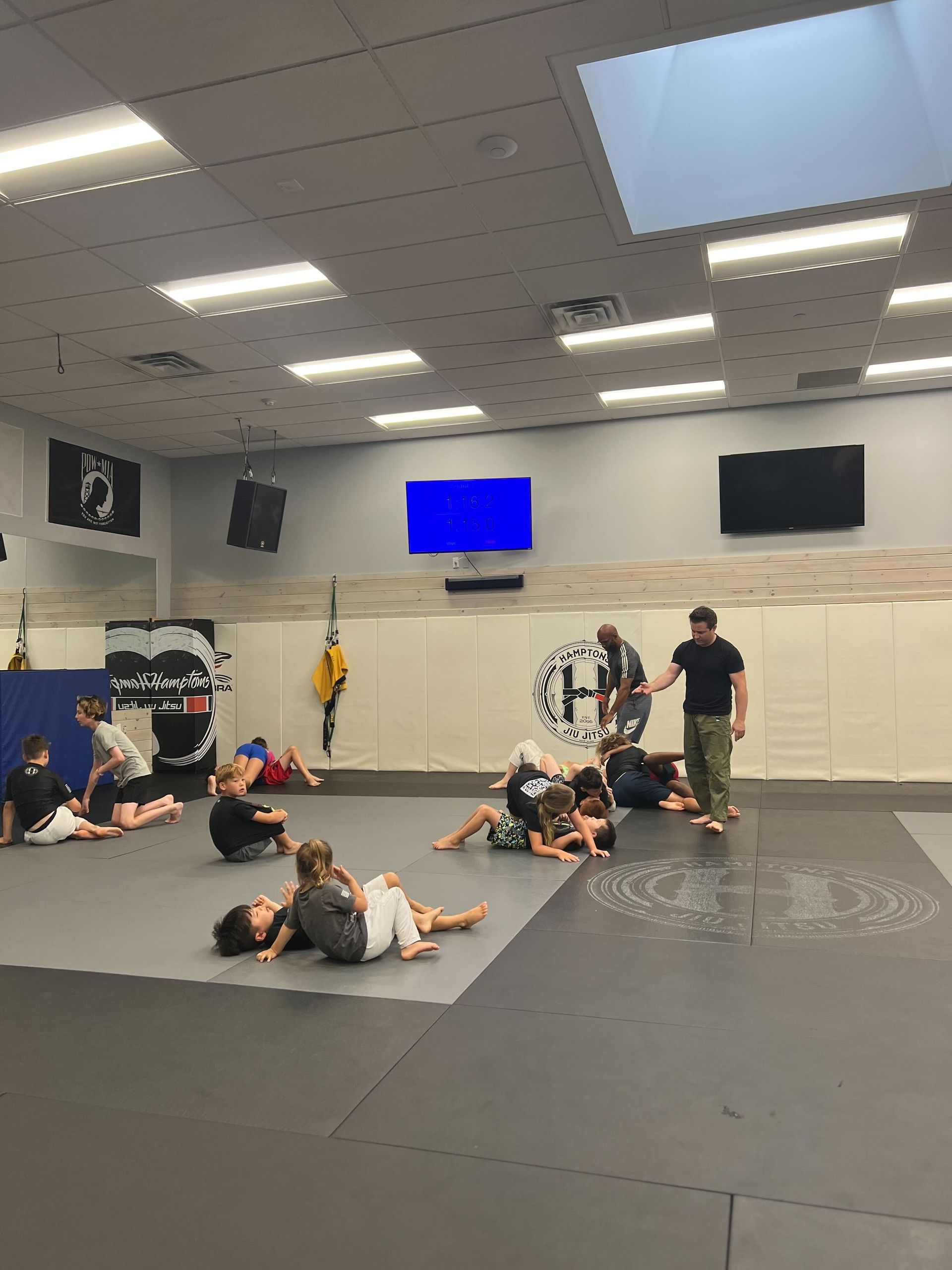
Another reason youth jiu jitsu works is that it is partner-based, not spotlight-based. Kids learn with a teammate right in front of them. That creates immediate feedback and social connection, and it also teaches empathy. Your child has to listen, take turns, and control intensity so everyone stays safe and improves together.
Confidence kids can feel, not just talk about
Confidence is not something we try to “give” kids with speeches. We build it through earned experiences. When your child learns how to escape a pin, hold a position for a few seconds longer than last week, or stay calm during a challenging drill, confidence becomes real and specific.
That is why the confidence data stands out. In studies tracking youth BJJ outcomes, 96.4% of parents reported improved confidence. We see that confidence show up in small moments: a kid who used to avoid partner work starts raising a hand for a turn, or a student who would get upset after a mistake starts laughing, resetting, and trying again.
Confidence also grows because youth jiu jitsu is honest. Techniques either work or they do not, and we adjust. Kids learn that improvement is not magic, it is practice. That lesson can be strangely calming, especially for kids who put a lot of pressure on themselves.
What confidence looks like in daily life
We often hear parents describe changes that have nothing to do with sports. A student starts speaking up in class, making eye contact, or handling a tough conversation without melting down. Another student becomes more willing to attempt challenging homework instead of avoiding it. Those are the kinds of “wins” families care about.
Confidence also affects posture and presence. When kids learn balance, base, and movement, they literally carry themselves differently. That can influence how peers perceive them, which matters when you are navigating school social dynamics.
Stress and anxiety: learning to stay calm under pressure
Modern kids deal with more stress than many adults realize. Social pressure, high expectations, schedules, and a lot of screen time can create a constant background buzz. Youth jiu jitsu gives kids a place to practice regulation: breathing, staying focused, and responding instead of reacting.
Research supports this, too. Parent reports show an 87.5% reduction in anxiety, and studies in teens link BJJ to reduced anxiety and improved life satisfaction. The mechanism is not mysterious. Training creates controlled stress, then teaches kids how to move through it. That is a life skill.
We also keep the environment predictable and respectful. Kids know what is expected, how to ask for help, and how to reset after a rough round. Over time, that routine can become an anchor, especially for kids who feel scattered or overstimulated elsewhere.
Discipline that feels doable, not harsh
Discipline gets a bad reputation because it is sometimes framed as punishment. In our youth program, discipline is more like a steady rhythm: show up, listen, try, repeat. Kids learn that consistency matters more than perfection.
In parent-reported outcomes, 92.8% noted a stronger commitment, and high percentages reported gains in self-discipline, perseverance, mental flexibility, and respectfulness. Those qualities grow naturally when kids see that effort leads somewhere. A technique that felt impossible in week one becomes familiar in week eight, and that is a powerful lesson.
If your child struggles with follow-through, youth jiu jitsu can help by creating short-term goals inside a long-term journey. We break skills into pieces, give kids a clear focus for the day, and reinforce progress without making training feel like a lecture.
Physical development without the “team sport pressure”
Youth jiu jitsu is obviously about self-defense skills, but it is also an excellent foundation for athletic development. Training uses dynamic movements that build coordination, reaction time, balance, agility, posture, and overall fitness. It is a full-body activity that challenges the brain and body together.
Studies and reports on martial arts participation show improvements in cardiovascular health, flexibility, reflexes, and general fitness. Parents also report strong health improvements, with one data point showing about an 80% perceived boost in health markers through consistent training. For many families, that matters as much as any technique.
A key benefit is that kids can progress without needing to be “picked” for a position or measured against a scoreboard every weekend. There is room for competitive goals if your child wants that later, but there is also room to simply train, improve, and enjoy moving.
Why technique-first training can be safer for kids
Because we emphasize leverage, positioning, and control, kids learn how to move with awareness rather than chaos. Classes are structured, supervision is constant, and intensity is scaled to age and experience. That helps reduce unnecessary risk and builds trust with both kids and parents.
Anti-bullying skills and real-world boundaries
Bullying is complicated. Sometimes it is obvious, sometimes it is subtle, and sometimes kids do not even have the words for what is happening. Youth jiu jitsu helps in several ways: body language changes, situational awareness improves, and kids learn what it feels like to handle pressure without freezing.
We also teach kids that the goal is safety, not domination. Practical self-defense includes awareness, creating space, and using the least force necessary. Just as important, training helps kids practice boundaries: saying no, speaking clearly, and asking trusted adults for support.
When kids feel capable, bullies often lose interest. That is not a guarantee, but it is a real pattern families notice. Confidence plus calmness is a strong combination.
Focus in a world full of distractions
If your child has trouble focusing, you are not alone. Many families in Southampton are juggling busy schedules and a lot of screen exposure, and attention can get fragmented. Youth jiu jitsu is physical, but it is also deeply mental. Kids must track positions, remember steps, and adapt in real time.
Parents report meaningful improvements in concentration and mental sharpness, with data showing around 78.6% reporting improved concentration. In class, focus is not abstract. If your child’s mind wanders, the technique stops working. That immediate feedback teaches kids to bring attention back to the task, again and again, without shame.
Over time, that can translate to better homework habits, more patience in school, and less reactivity at home. It is not magic, but it is practice, and practice counts.
How our youth jiu jitsu classes are structured
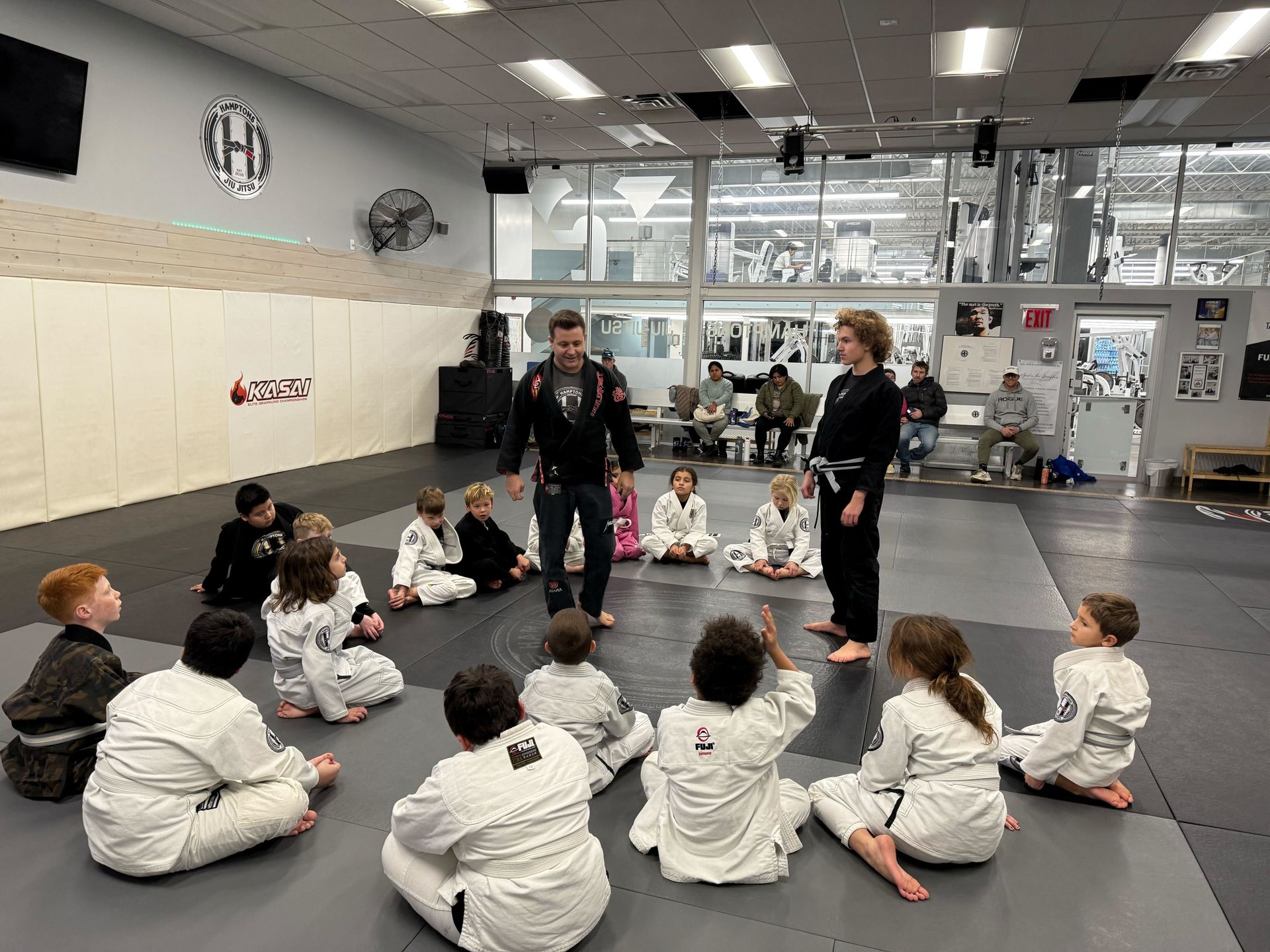
Parents often want to know what a typical week looks like. While exact times vary, our class schedule is designed to be predictable and age-appropriate, with sessions typically running 45 to 60 minutes and many families training 2 to 3 times per week.
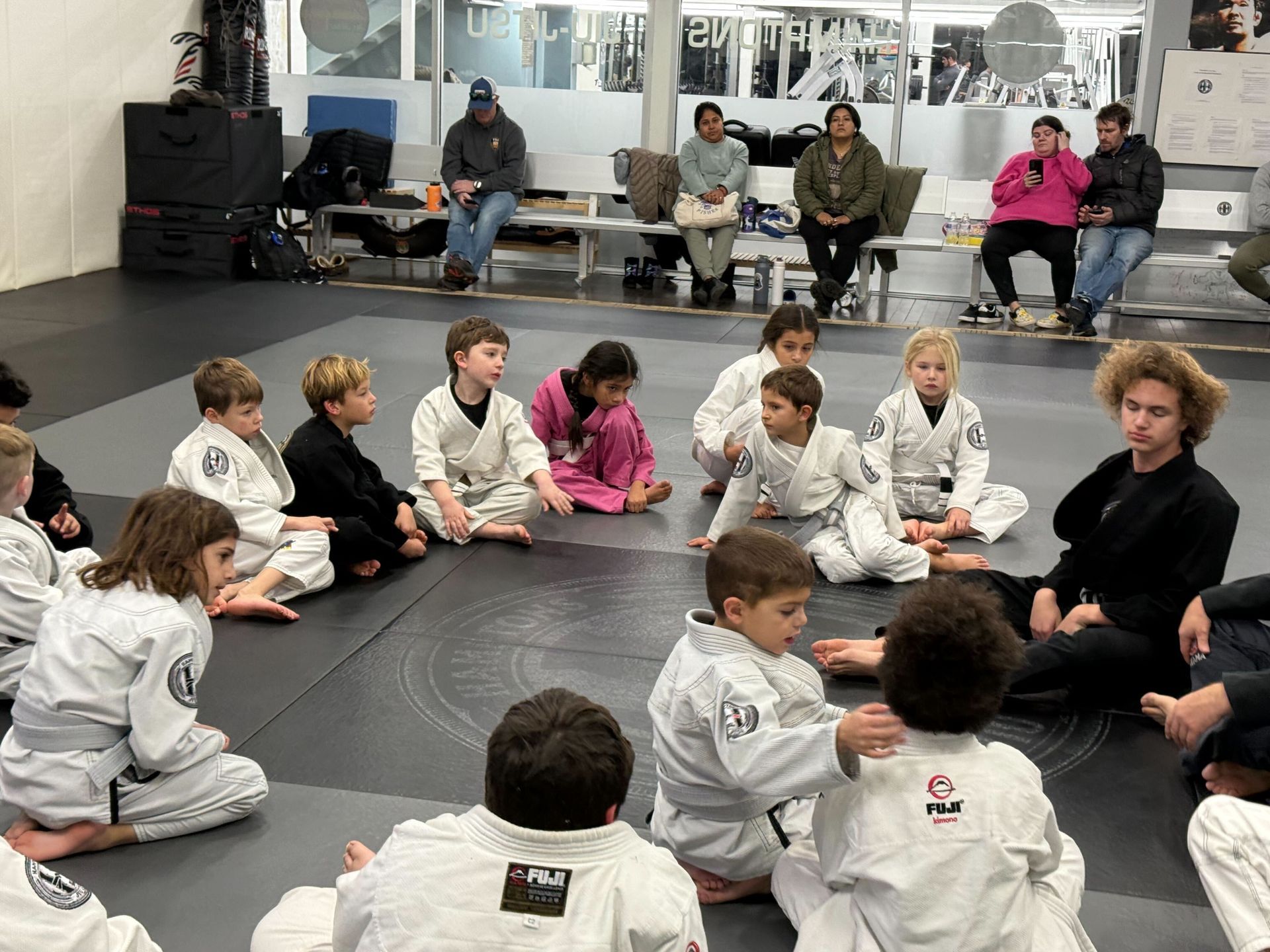
We group kids by age and developmental stage so coaching cues make sense and partners match well. A four-year-old needs a different kind of structure than an eleven-year-old, and we treat that seriously.
Age-based progression we use in the program
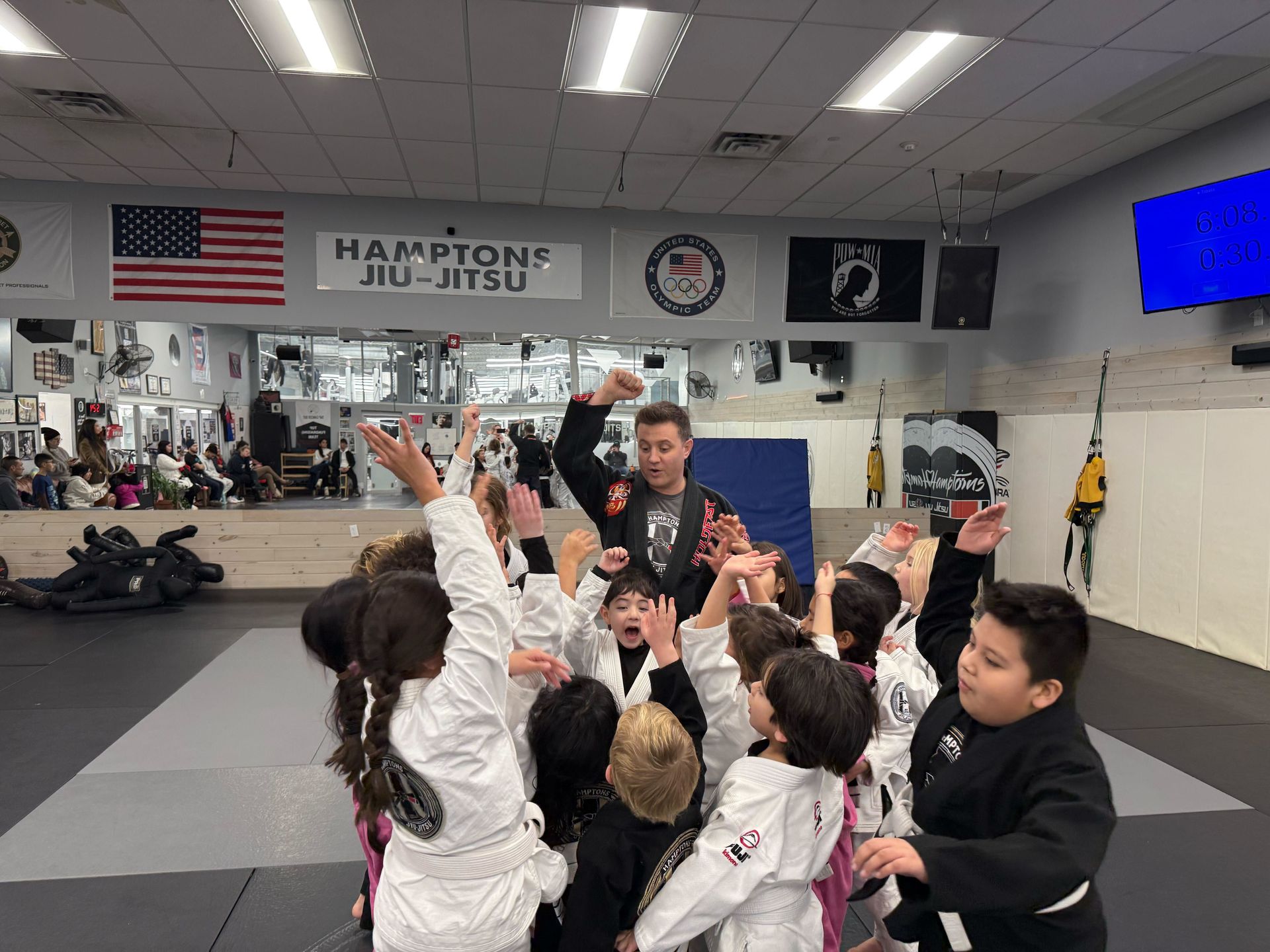
• Ages 4 to 5: foundational movement, listening skills, safe partner interaction, and basic positions taught through games and simple drills
• Ages 6 to 7: core techniques, balance and coordination work, and structured drilling that builds confidence quickly
• Ages 8 to 12: more detailed positional learning, controlled sparring, and deeper problem-solving with an emphasis on emotional maturity
This progression keeps training challenging without being overwhelming. It also helps kids build a long runway of skills, rather than rushing into advanced intensity too soon.
What to expect in the first month
Starting something new can be a little awkward, for kids and parents. That is normal. We keep the early experience simple: learn a few positions, practice basic movements, and build comfort with partners. The first goal is not “winning.” The goal is participation, safety, and small wins.
In many families, early changes show up faster than expected. You might notice your child sleeping better after training days, asking to come back, or talking about techniques at the dinner table. Within a few months, many parents report noticeable improvements in mood, awareness, and resilience. Those outcomes are consistent with broader trend data showing strong confidence increases and better emotional regulation through martial arts participation.
A simple readiness checklist for parents
If you are wondering whether your child is ready for youth jiu jitsu in Southampton NY, here are a few helpful signs:
1. Your child can follow simple rules in a group for short periods
2. Your child can handle light physical contact without panicking
3. Your child is curious and willing to try, even when unsure
4. Your child can separate from a parent for class time, even if nervous at first
5. Your child benefits from routine, movement, and clear expectations
If one or two items are shaky, that is still workable. We can often help kids grow into readiness through patient coaching and consistent structure.
Why community matters as much as technique
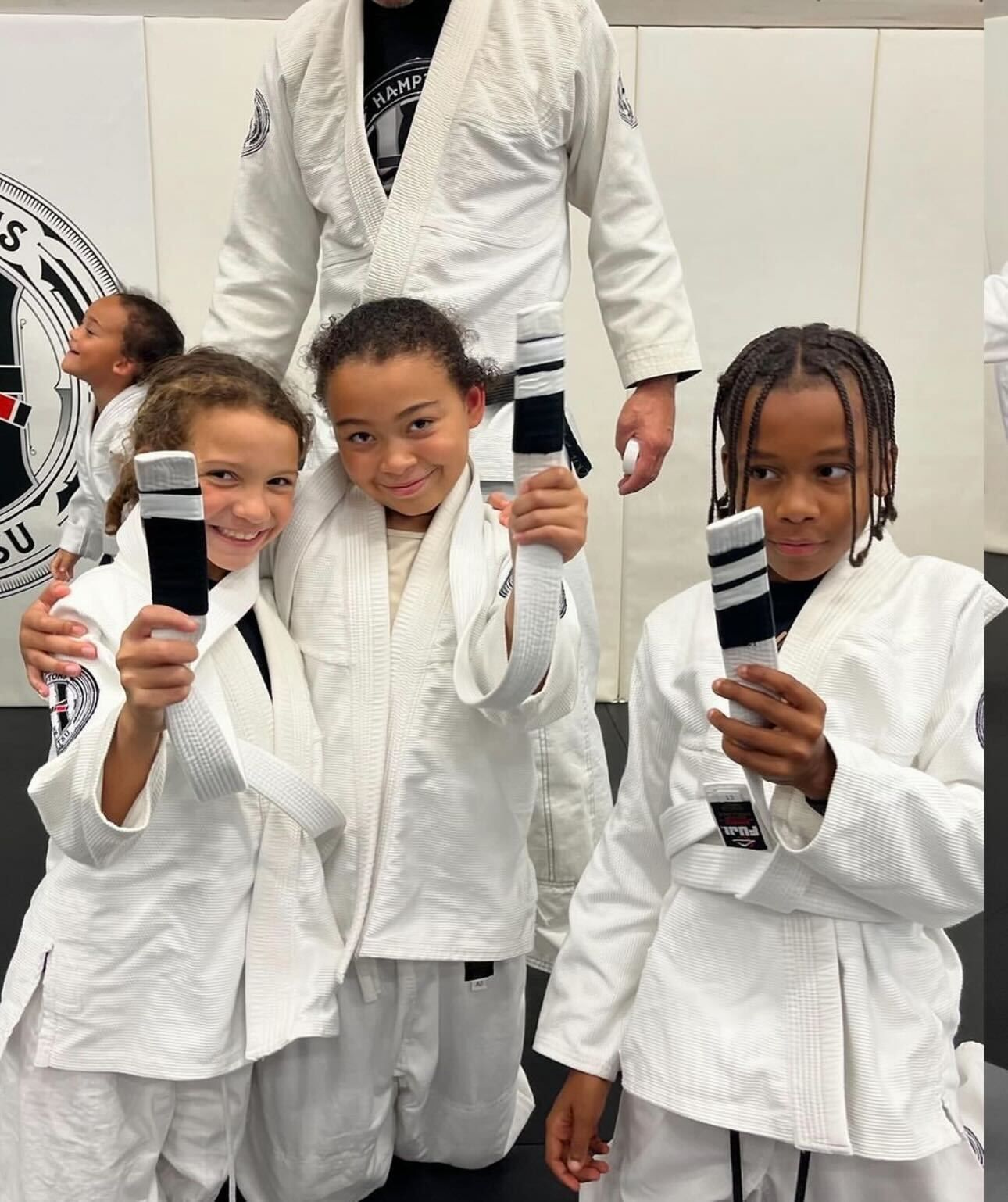
One of the most overlooked benefits of youth jiu jitsu is belonging. In parent surveys, 100% reported a sense of community. That stands out because kids today can be socially connected online while still feeling isolated in person.
Partner training creates real connection. Kids learn names, communicate, and work with different personalities. They also learn to win and lose with respect. Those social skills can be just as valuable as the physical ones, especially in a high-pressure environment where kids may feel judged.
Family participation is also growing nationally, with data showing 87% of families training together in some capacity. Even if you are not training, your child benefits from being part of a community where effort is respected and improvement is celebrated.
Take the Next Step
If you want youth jiu jitsu to be more than an after-school activity, you need a program that develops the whole kid: confidence, composure, fitness, and real social connection. That is the standard we hold ourselves to every day, and it is why families keep the routine when life gets busy.
When you are ready to explore youth jiu jitsu in Southampton NY with a clear class structure, age-based coaching, and a supportive environment, we would love to welcome you to Hamptons Jiu-Jitsu and help your child build skills that last.
Challenge your body and sharpen your mindset with martial arts training at Hamptons Jiu-Jitsu.
ACCESS OUR SCHEDULE
& EXCLUSIVE WEB SPECIAL
Secure your spot and get started today with our EXCLUSIVE offer!