Jiu Jitsu Mobility Drills: Improve Flexibility and Prevent Injuries in Southampton
Mobility is the quiet advantage that helps your guard feel lighter, your escapes sharper, and your body more resilient on the mats.
If you train Jiu jitsu long enough, you start noticing a pattern: the people who move well tend to waste less energy. It is not just strength or cardio. It is hips that rotate when you need them to, shoulders that stay stable under pressure, and a spine that can flex and extend without feeling like it is stuck.
In our Southampton community, we also see how active life outside the academy shapes what your body needs. Beach days, weekend sports, long hours sitting, and youth athletics all leave patterns in the body. That is why we treat mobility drills as part of skill-building, not a separate “stretching chore” you do only when something starts hurting.
This guide breaks down the mobility areas that matter most for Jiu jitsu, the drills we rely on, and a simple weekly structure you can actually stick with. The goal is practical: improve flexibility you can use, and reduce injury risk from repetitive stress.
Why mobility matters for Jiu jitsu performance and injury prevention
Mobility is your ability to move through a range of motion with control. Flexibility is part of it, but Jiu jitsu demands something more specific: usable positions under load. You might hit a deep hip angle for guard retention, then immediately need to bridge and rotate to escape. That is mobility plus strength at end range.
We focus on mobility because it connects directly to the moments where people get stuck or strained. Tight hips can limit your ability to pummel for inside position. Stiff thoracic rotation can make your frames weaker. Limited ankle mobility can affect base and posture during passing. And when the body cannot find a safe range, it finds a workaround, usually by twisting or yanking through a joint that was not meant to take that stress.
A lot of common aches in Jiu jitsu show up in the hips and shoulders. You feel it when you start playing more open guard, when you grip harder, or when you add more rounds per week. Mobility work is not a guarantee against injuries, but it meaningfully lowers the odds that small restrictions turn into chronic problems.
The mobility zones we train first (and why)
Different bodies have different limits, but the same areas keep coming up for grapplers. In our classes, when we see someone struggle to hold guard, invert safely, or maintain posture under pressure, it is often a mobility issue disguised as a technique issue.
Hips: guard retention, triangles, and hip escapes
Hip rotation is the headline feature. If internal rotation is limited, closed guard and angle changes feel clunky. If external rotation is limited, butterfly and half guard positions can feel cramped. Strong, mobile hips also make shrimping and technical stand-ups smoother, which matters a lot when you are tired.
Shoulders: framing, posting, and submission safety
Your shoulders need to be both mobile and stable. You want overhead range for certain grips and movements, but you also need control so you do not dump stress into the front of the shoulder during posts or scrambles. Shoulder mobility should never feel loose and sloppy. It should feel controlled.
Spine and thoracic area: rotation under pressure
The thoracic spine is your rotation engine. When it is stiff, the low back often tries to rotate instead, and that is where irritation builds. Thoracic mobility supports better bridging angles, stronger frames, and cleaner turning escapes.
Ankles and feet: base, passing pressure, and balance
Ankle dorsiflexion influences your squat depth, your ability to drive forward during passing, and your balance when you are forced to widen your base. It also helps keep knees happier because the chain moves better from the ground up.
Wrists: grips, posting, and long-term comfort
Jiu jitsu grips ask a lot from wrists and forearms. Wrist mobility drills are simple, but they add up. When your wrists feel better, your grip endurance tends to improve because you are not fighting discomfort all round.
Our approach: integrated mobility, not random stretching
Mobility trends in 2024 and 2025 are leaning toward integrated drills that match the shapes you hit in live training. We agree with that direction. Static stretching has a place, but mobility that blends movement, breath, and technique patterns tends to transfer better to Jiu jitsu.
That means we often combine a drill with a familiar action: hip heists, shrimping variations, and controlled rolls that teach your body to access range of motion with coordination. You are not just getting looser. You are learning where your weight goes, how your ribs and hips connect, and how to keep tension where it belongs.
Another key piece is end-range strength. If you can reach a position but cannot control it, you are still at risk. That is why we like isometric contractions in stretches, using methods like PAILs and RAILs. You build strength in the exact angles where people tend to get tweaked.
A 10 to 15 minute mobility routine you can repeat
Consistency beats intensity here. If you only do mobility once in a while for 45 minutes, it usually turns into “never.” A short routine done 3 to 5 times per week is where you will notice changes in how you roll.
Here is a simple starter routine we recommend for Jiu jitsu athletes in Southampton who want better movement without overthinking it:
• 90 90 hip stretch with gentle contractions: Spend about 2 minutes per side, rotating tall through the spine and adding light isometrics.
• Cat-cow with slow breathing: Take 8 to 10 long breaths, aiming for smooth spinal flexion and extension rather than big range.
• Wrist circles and wrist rocks: Do 10 controlled reps each direction, then shift weight gently through hands on the mat.
• Thread the needle thoracic rotation: Hold 15 to 30 seconds per side, focusing on rotation from the upper back.
• Bear crawl flow: Move for 3 to 5 minutes at an easy pace, keeping knees close to the floor and ribs tucked.
If you do nothing else, do this. It covers the most common problem areas, and it does not require equipment. It also works well for people who are not naturally flexible, which is most of us.
When to do mobility drills for the best results
Timing matters. Stretching cold, especially long static holds, is not our favorite way to start a hard session. We prefer movement-based mobility as a warm-up, and longer holds or stronger isometrics after training or on off days.
A practical weekly structure looks like this:
1. Before training: 5 to 8 minutes of dynamic mobility that matches the session, like hip switches, cat-cow, and shoulder circles.
2. After training: 5 to 10 minutes of downshifting mobility, using longer holds for hips and thoracic rotation.
3. On rest days: 10 to 15 minutes of focused work, adding PAILs and RAILs for end-range strength.
If you are sore or beat up, keep the intensity low. Mobility should leave you feeling more organized, not shaky.
Drill breakdowns and coaching cues that make them work
Mobility drills are simple, but details matter. A small cue often makes a drill go from “I guess I am stretching” to “I can feel this changing my movement.”
90 90 hips (for rotation you can use)
Set your front shin and back shin at about 90 degrees. Sit tall, then hinge forward slightly over the front leg without collapsing your spine. If you want the end-range strength benefit, gently press your front ankle or knee into the floor for 10 to 15 seconds, then relax and sink a little deeper. Switch sides and keep it calm.
Cat-cow (for spinal control)
The goal is smooth segmental motion. Move one vertebra at a time if you can. Exhale as you round, inhale as you extend. This drill helps your spine feel less “stuck” when you are trying to escape pressure from top position.
Thread the needle (for thoracic rotation and frames)
Start on hands and knees. Slide one arm under the other, rotate your chest toward the ceiling, and breathe into the upper ribs. If your shoulder feels pinchy, reduce range and focus on rotation through the upper back.
Wrist circles and loading (for grips and posting)
Make slow circles with your hands, then put your palms down and gently rock forward and back. You should feel a stretch through the forearms without sharp discomfort. Over time, your posting feels more confident, and grips feel less like they are tearing you up.
Bear crawls (for full-body integration)
Crawls connect shoulders, hips, and core. Keep your steps quiet and controlled. It is a simple way to build mobility you can stabilize, which is exactly what Jiu jitsu asks for.
How mobility shows up in real rolling
When your mobility improves, you notice it in specific situations. Guard retention becomes less frantic because your hips can re-angle quickly. Escapes feel less like a deadlift because your spine and shoulders can rotate into the right frame. Passing feels heavier because your ankles and hips let you keep balance while driving.
It also changes how training feels the next day. Better mobility often means less lingering stiffness in the hips and shoulders, especially when you train multiple times per week. That matters if you want to stay consistent, and consistency is the real engine behind improvement in Jiu jitsu.
Youth mobility: keeping it fun and safe for kids in Southampton
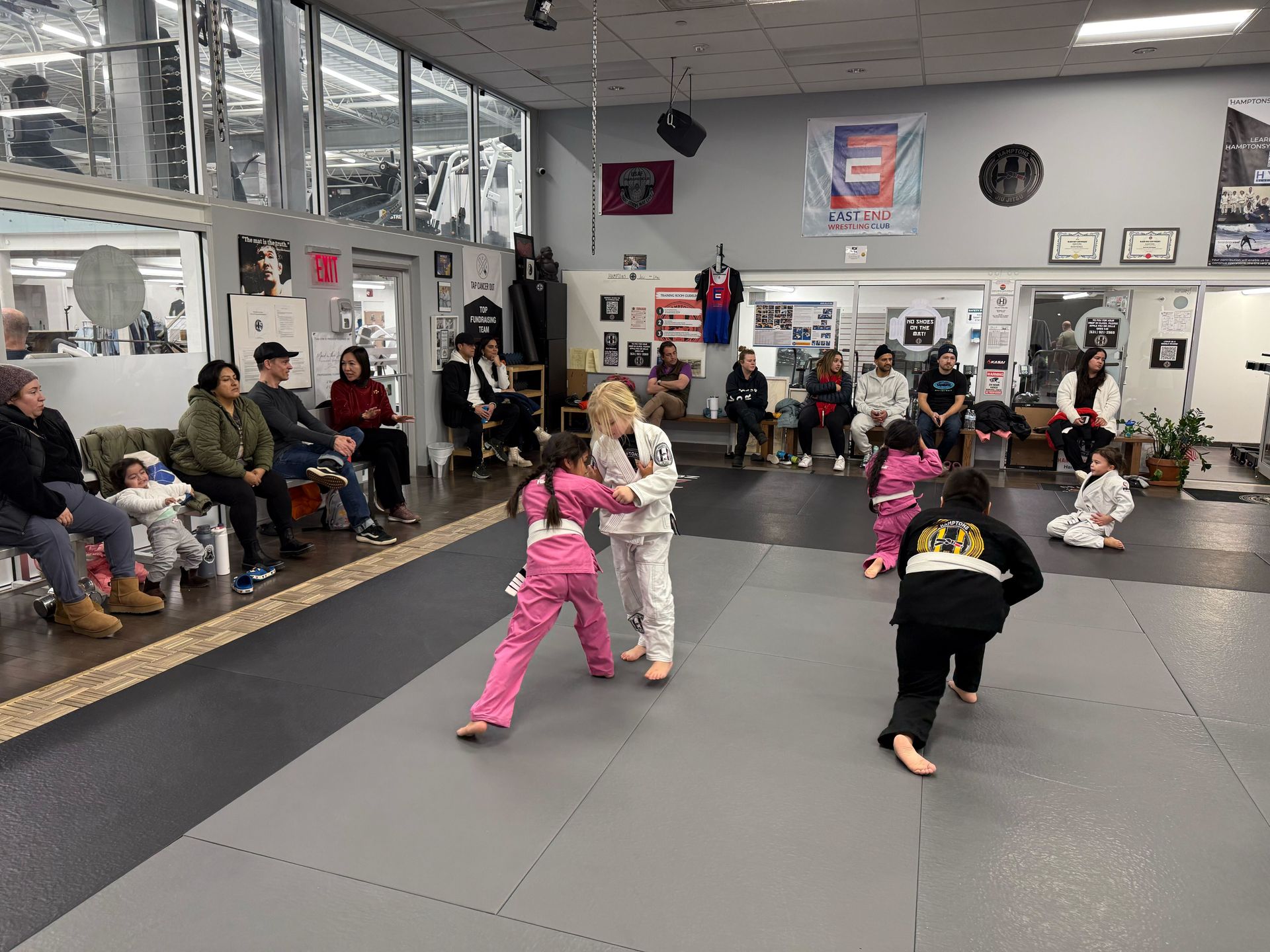
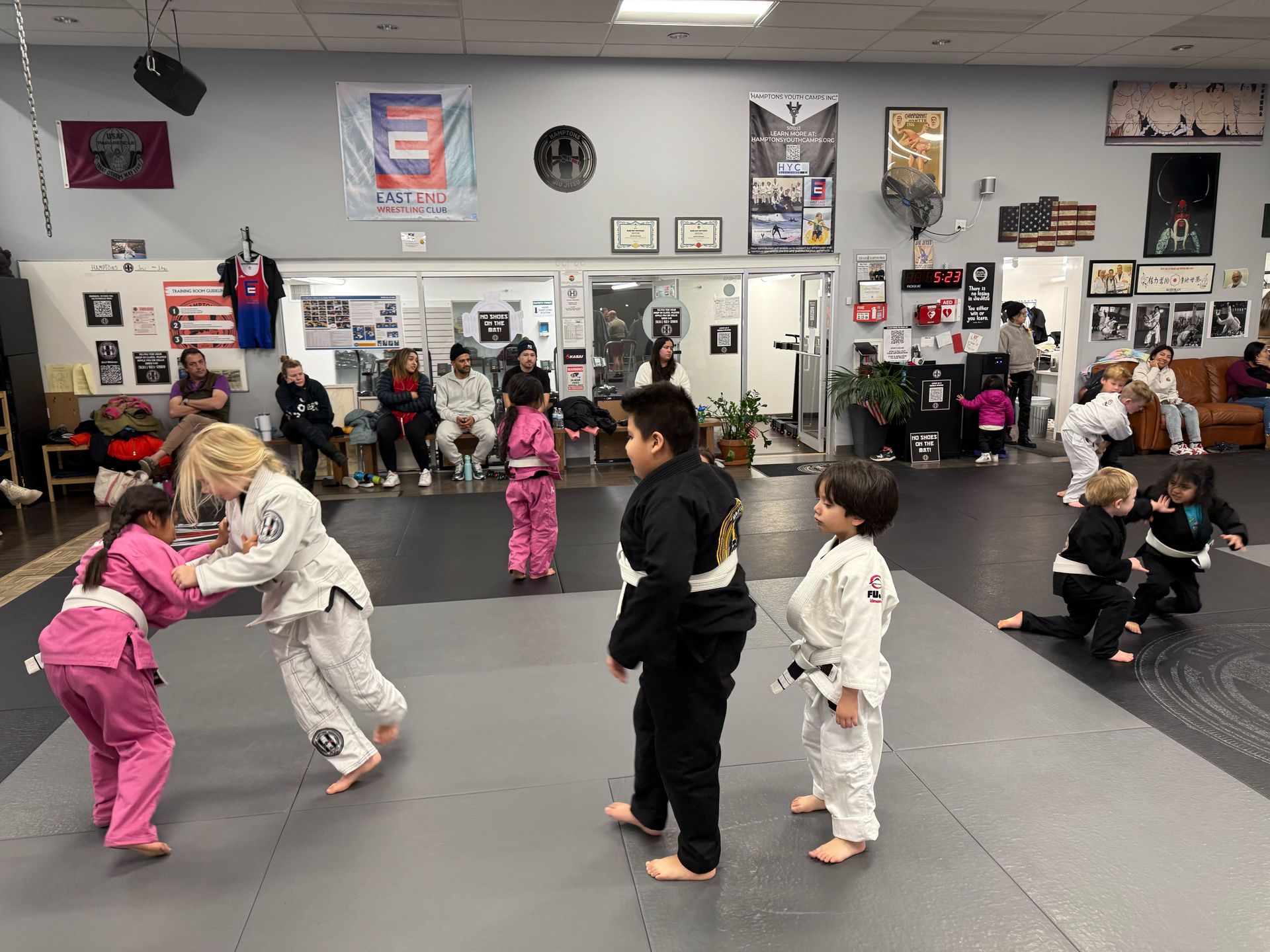
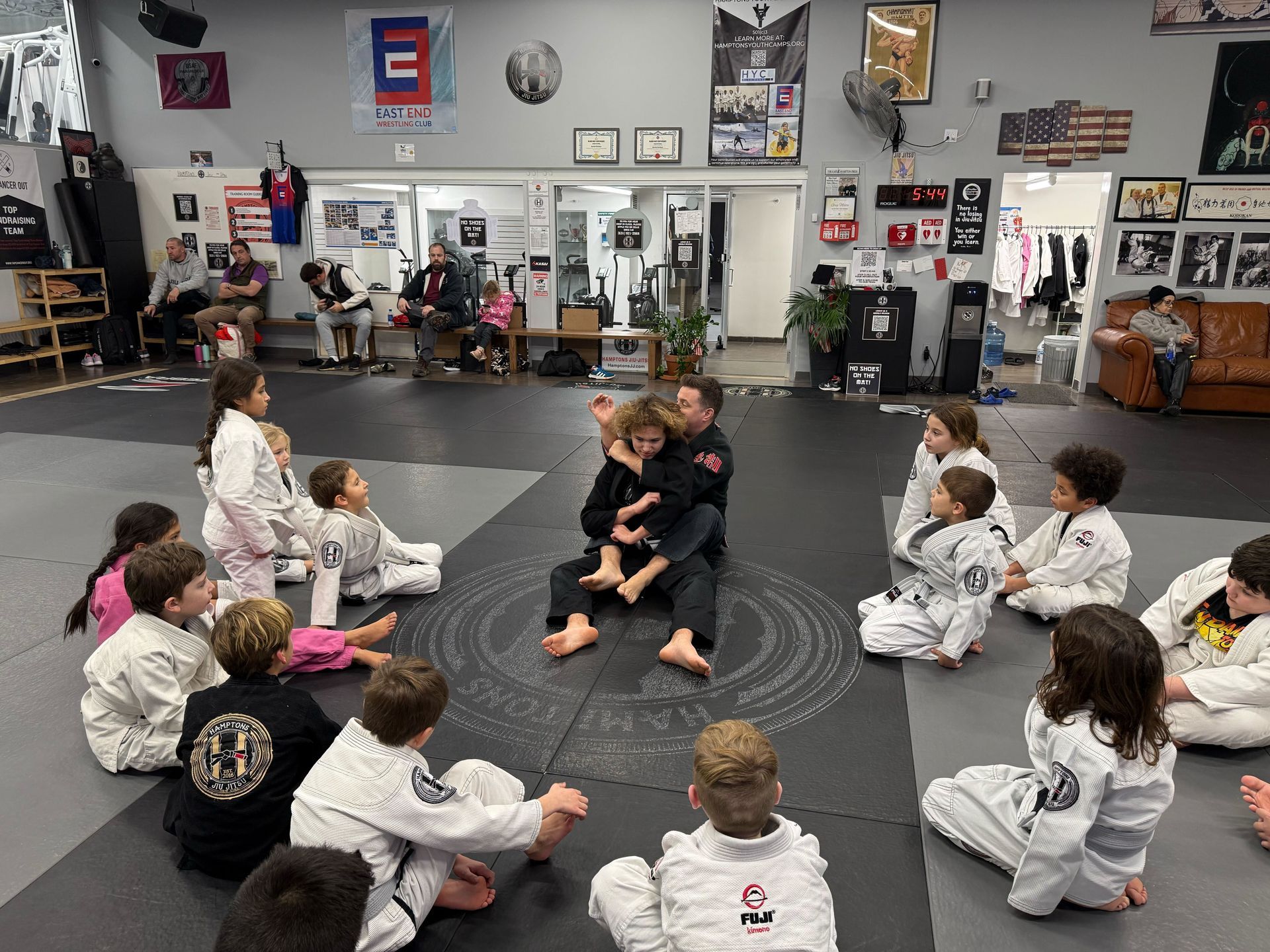
For youth jiu jitsu in Southampton NY, mobility should not look like a mini version of an adult stretching class. Kids do best with movement games that build coordination, balance, and joint control without turning it into a lecture.
We like using animal movements and simple flows because kids naturally explore range of motion when it feels like play. Crawls, controlled rolls, and gentle hip switches build athleticism that carries into school sports and everyday activity. Just as importantly, it teaches body awareness early, so kids learn how to move safely when training intensity increases later on.
Parents also appreciate that mobility work supports injury prevention. Growing bodies can be tight in unpredictable ways, and a little structure goes a long way. When youth students move better, they learn technique faster and feel more confident on the mat.
Mobility and the active Hamptons lifestyle
Living in Southampton often means your body has more going on than training alone. Surfing, running on sand, tennis, seasonal work, and long drives can all affect hips, ankles, and posture. Mobility drills help “reset” those patterns so you can show up to class ready to learn instead of spending the first rounds just trying to loosen up.
If you train martial arts in Southampton consistently, mobility becomes part of staying in the game long-term. It is not flashy, but it is the difference between taking weeks off for nagging pain and being able to train year-round with fewer interruptions.
Take the Next Step
If you want your Jiu jitsu to feel smoother and safer, mobility is one of the most reliable upgrades you can make, and it does not require a major time commitment. When we build hip rotation, thoracic movement, shoulder control, and wrist resilience into training, you get positions that feel more accessible and a body that recovers better between sessions.
At Hamptons Jiu-Jitsu, we treat mobility as part of skill, not an afterthought, and we coach it in a way that fits real rolling and real life in Southampton. If you are aiming for better performance, fewer setbacks, and a training routine you can sustain, we are ready to help you build that foundation.
Turn what you learned here into real training experience by starting a Brazilian Jiu-Jitsu class at Hamptons Jiu-Jitsu.
ACCESS OUR SCHEDULE
& EXCLUSIVE WEB SPECIAL
Secure your spot and get started today with our EXCLUSIVE offer!