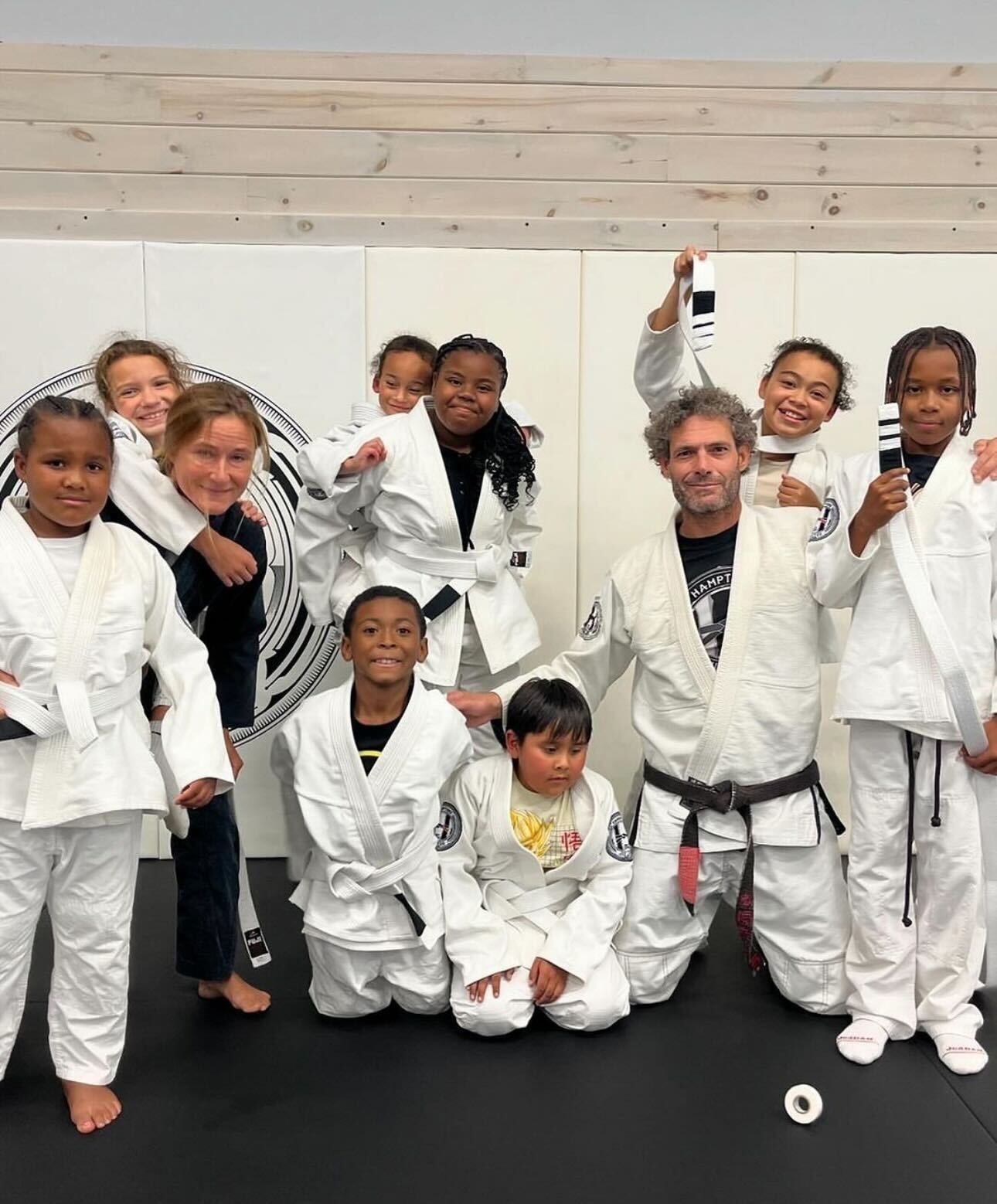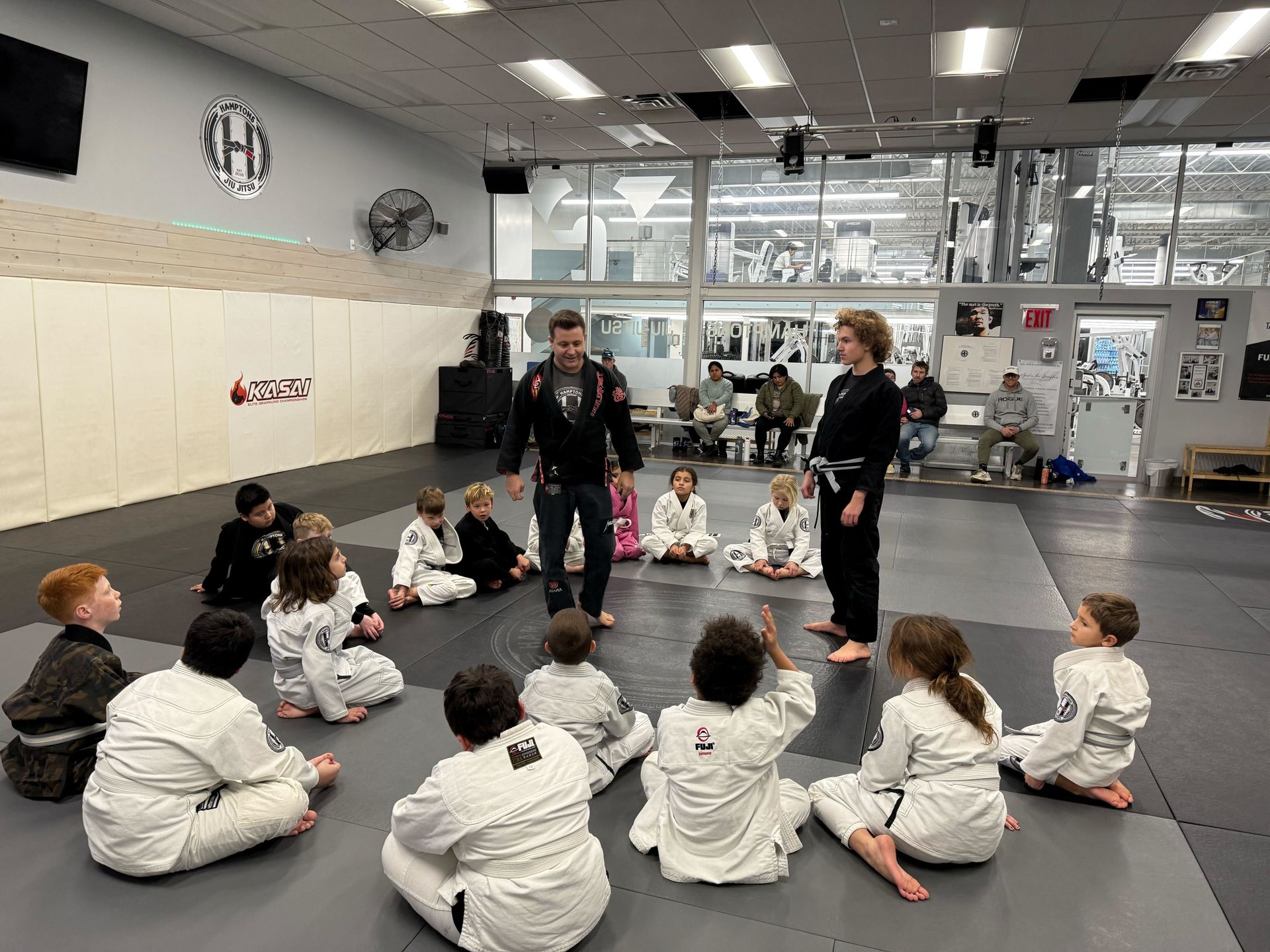
What to Expect in Your Child’s First Youth Jiu Jitsu Class in Southampton
Your child’s first class should feel structured, upbeat, and surprisingly welcoming, even if you both walk in a little nervous.
Starting youth jiu jitsu can bring up a lot of practical questions fast: What will your child do on the mats, will anyone get hurt, and how do we know if it is the right fit? We get it, because most families who come in are not looking for a high-pressure tryout. You want a safe place where your child can move, learn, and feel proud walking back to the car.
In our youth jiu jitsu program, we focus on fundamentals first. That means positions, escapes, and simple, age-appropriate control concepts taught in a way kids can actually remember. The goal for day one is not perfection. It is comfort, good habits, and a positive first experience that makes your child want to come back.
If you are exploring youth jiu jitsu in Southampton NY, this guide breaks down exactly how a first class typically goes, what your child needs, and what you as a parent can expect from us before, during, and after that first session.
What youth jiu jitsu is, in kid-friendly terms
Brazilian Jiu-Jitsu is a grappling-based martial art that teaches children how to control space, manage distance, and solve physical problems without relying on strikes. In youth jiu jitsu, we keep the language simple and the structure consistent so kids know what is coming next. That predictability matters, especially for younger students who thrive with clear boundaries.
Instead of throwing kids into chaos, we introduce concepts like base, balance, and posture through movement drills and guided partner practice. Over time, kids learn what it feels like to be in common positions on the ground and how to stay calm enough to make a smart choice. That calm problem-solving is a big reason families choose this style of training.
Who the first class is for, and what age groups look like
Most kids can start around ages 4 to 6, as long as your child can follow basic instructions, respect personal space, and handle a group setting. We group students by age and overall maturity so the training matches the way kids learn and interact at each stage.
If your child is energetic, that is fine. We expect movement. We just channel it. If your child is quieter, that is fine too. Our job is to create an environment where both personalities can succeed, and where nobody feels singled out for being new.
What to wear and what to bring (simple and stress-free)
For a first youth jiu jitsu class, you do not need to overthink gear. Many families start with comfortable athletic clothing, and we will guide you on next steps if your child decides to continue. The most important detail is safety and comfort.
Here is what we recommend for day one:
- Athletic shirt and shorts or leggings with no zippers, snaps, or pockets that can scratch
- A water bottle your child recognizes and will actually drink from
- Hair tied back securely if your child has longer hair
- Flip-flops or slides for walking off the mats (bare feet stay on the mat area)
- A small snack for afterward, because kids often walk out hungry
If you have questions before you arrive, we are happy to help you plan. The smoother the first visit feels, the easier it is for your child to relax and enjoy the class.
Arriving at the academy: what check-in feels like
We suggest arriving about 10 minutes early. That little buffer helps your child look around, meet us, and see other kids warming up. It also gives you time to handle any quick paperwork and ask questions without feeling rushed.
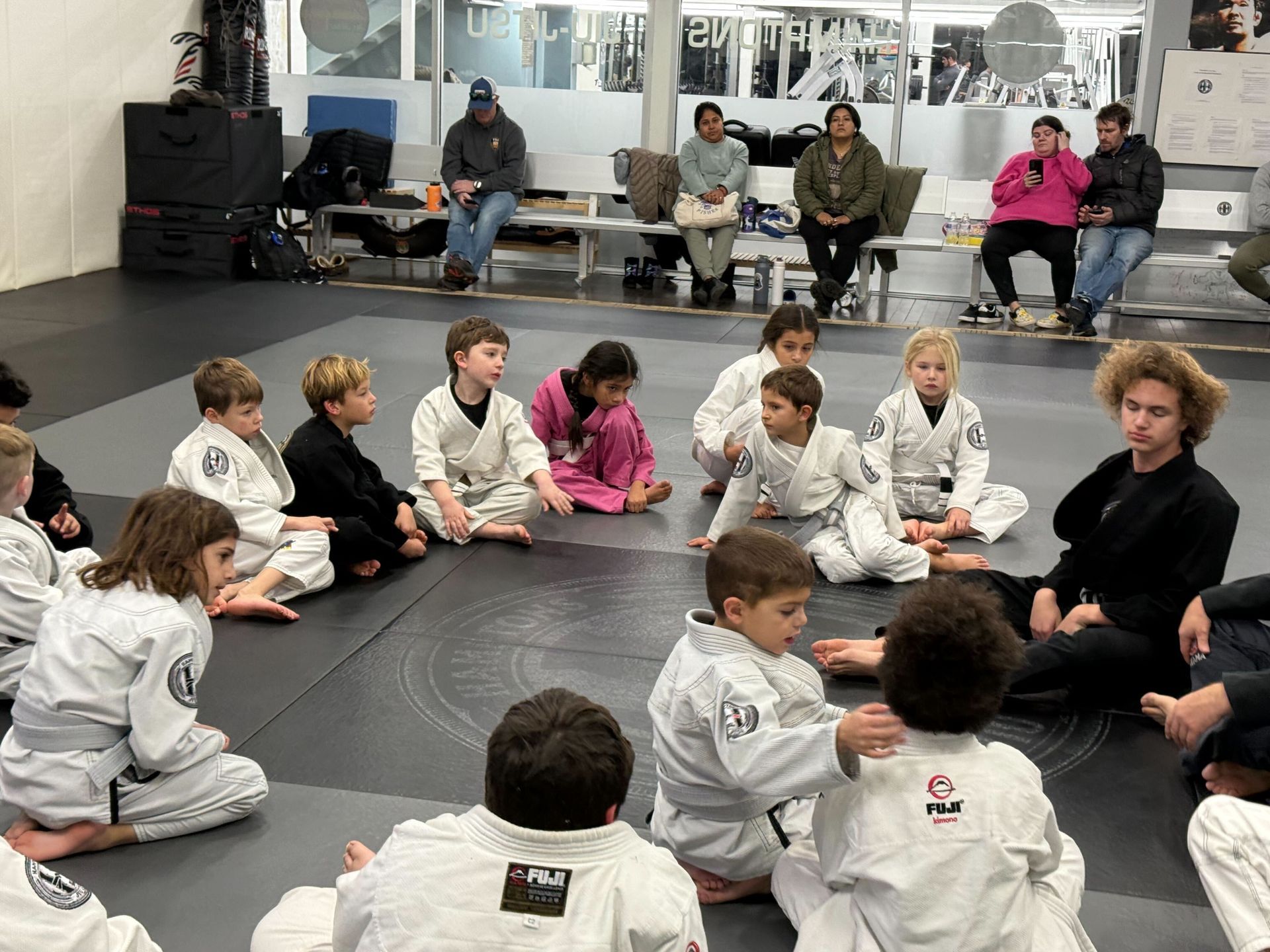
When you walk in, you will notice that the room has a clear training space and a clear set of expectations. Kids line up, shoes come off, and we keep the routine consistent. Consistency is a quiet form of comfort, especially for beginners.
The typical first class structure (45 to 60 minutes)
A well-run first class should have a rhythm: move, learn, practice, and finish on a good note. We keep class time age-appropriate and organized so your child stays engaged without feeling overwhelmed.
Warm-up: movement skills disguised as fun
Warm-ups in youth jiu jitsu are not long-distance running or endless push-ups. We use movement patterns that directly support grappling, like learning how to fall safely, how to crawl with control, and how to move hips on the ground. You may hear us call out terms like shrimping or bridging, but we teach them as simple body movements first.
This part also gives us a chance to see how your child moves, how your child listens, and what kind of coaching cues land best. That helps us teach more effectively for the rest of class.
Technique: one clear lesson with a beginner-friendly goal
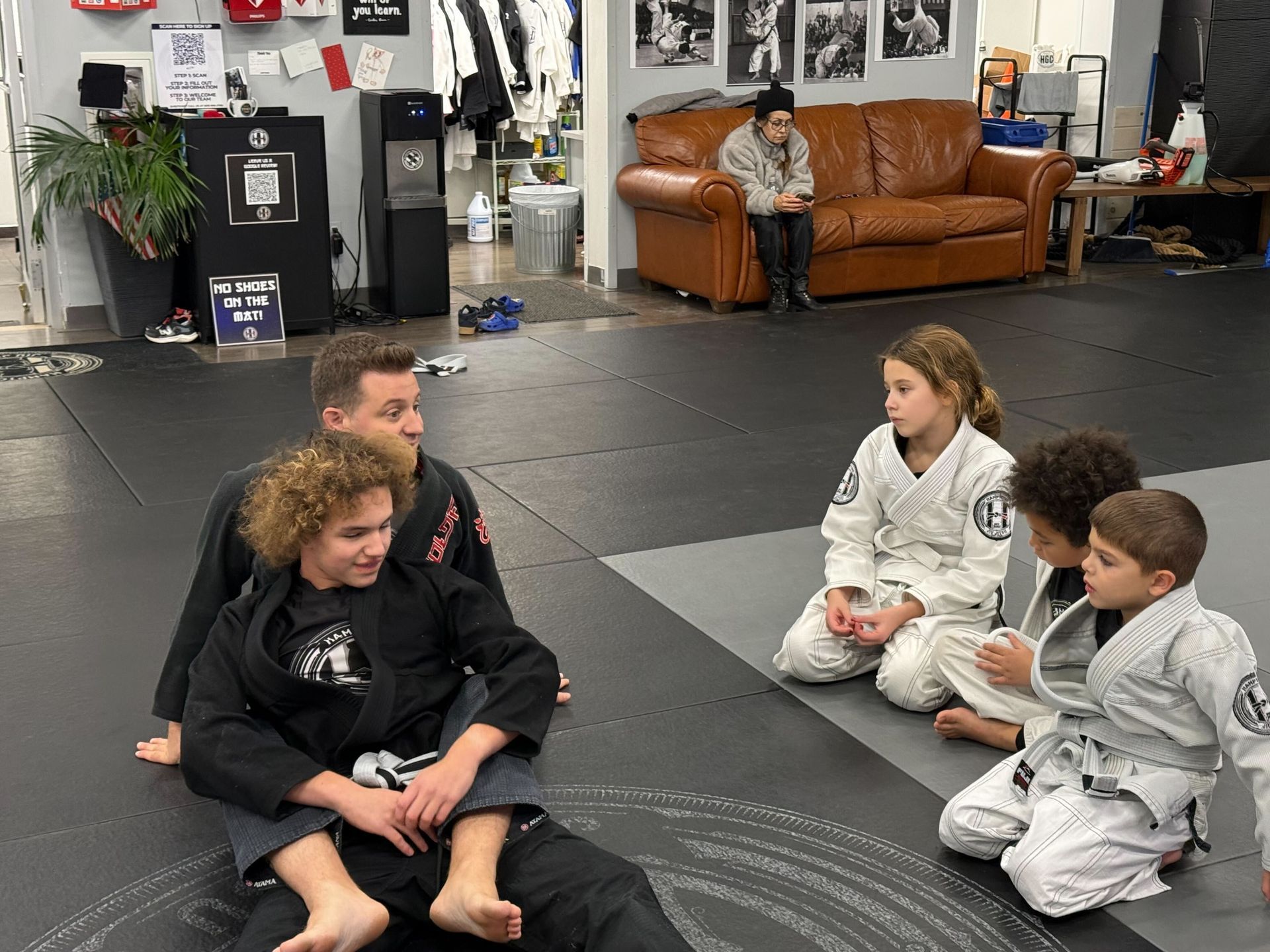
After warm-up, we teach a small set of techniques, usually centered on a position and an escape. For example, kids may learn how to keep elbows in, how to turn to their side, and how to create space before standing up. We keep the instruction short, then we repeat it in steps so kids can succeed quickly.
Our instructors use a lot of guided coaching here, because the first day is about building trust. Your child should feel, “I can do this,” even if it looks a little clumsy at first. Clumsy is normal. It is also how learning starts.
Partner practice: supervised, cooperative drilling
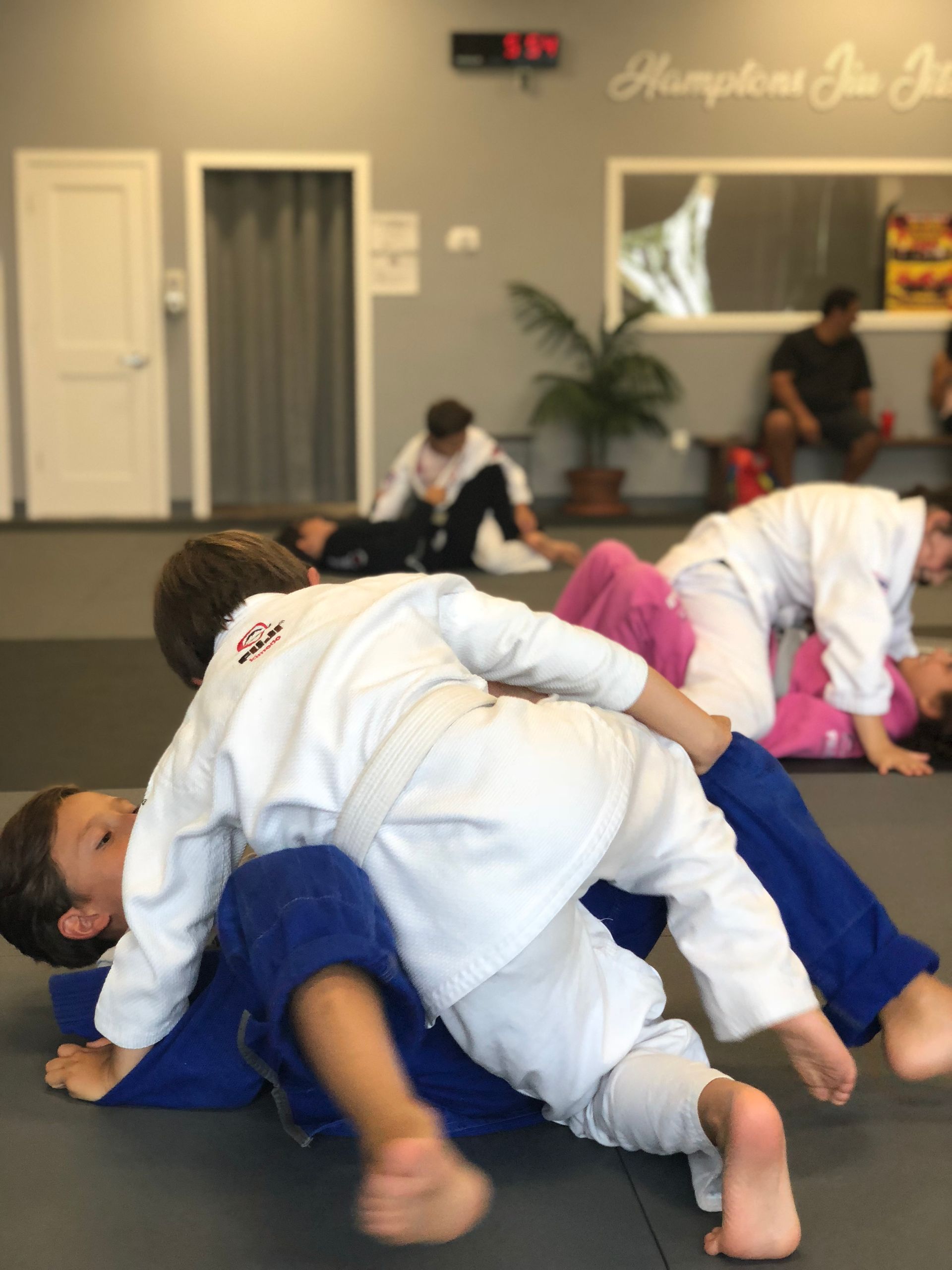
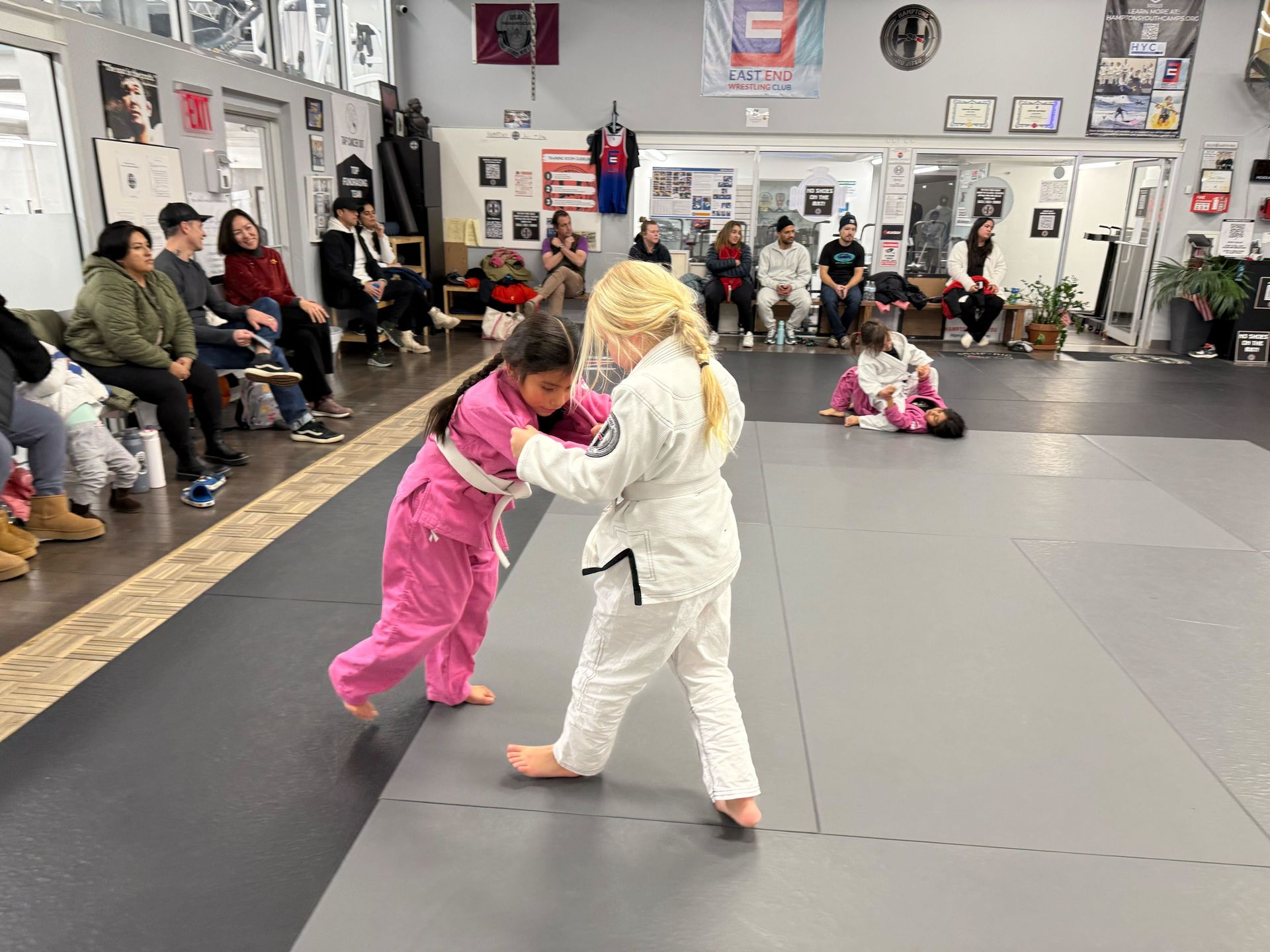
Next comes partner work. This is where parents sometimes get anxious, but beginner partner training is controlled and cooperative. We pair students carefully and keep the intensity low. Instead of “win,” the goal is “practice the steps safely.”
This is also where social skills start showing up. Kids learn how to take turns, how to listen to a partner, and how to be a good teammate. Those details often carry into school and sports, which is one reason families value martial art classes in Southampton that emphasize respect and structure.
Games: building athleticism and decision-making
Yes, we play games, and we do it on purpose. Many jiu jitsu games are really position drills in disguise. They build balance, coordination, reaction time, and the habit of making choices under pressure, but in a way that still feels fun.
Games also help kids associate the mats with positive effort. You want your child working hard, but smiling while doing it. That balance is where consistent training comes from.
Cool-down and wrap-up: ending with confidence
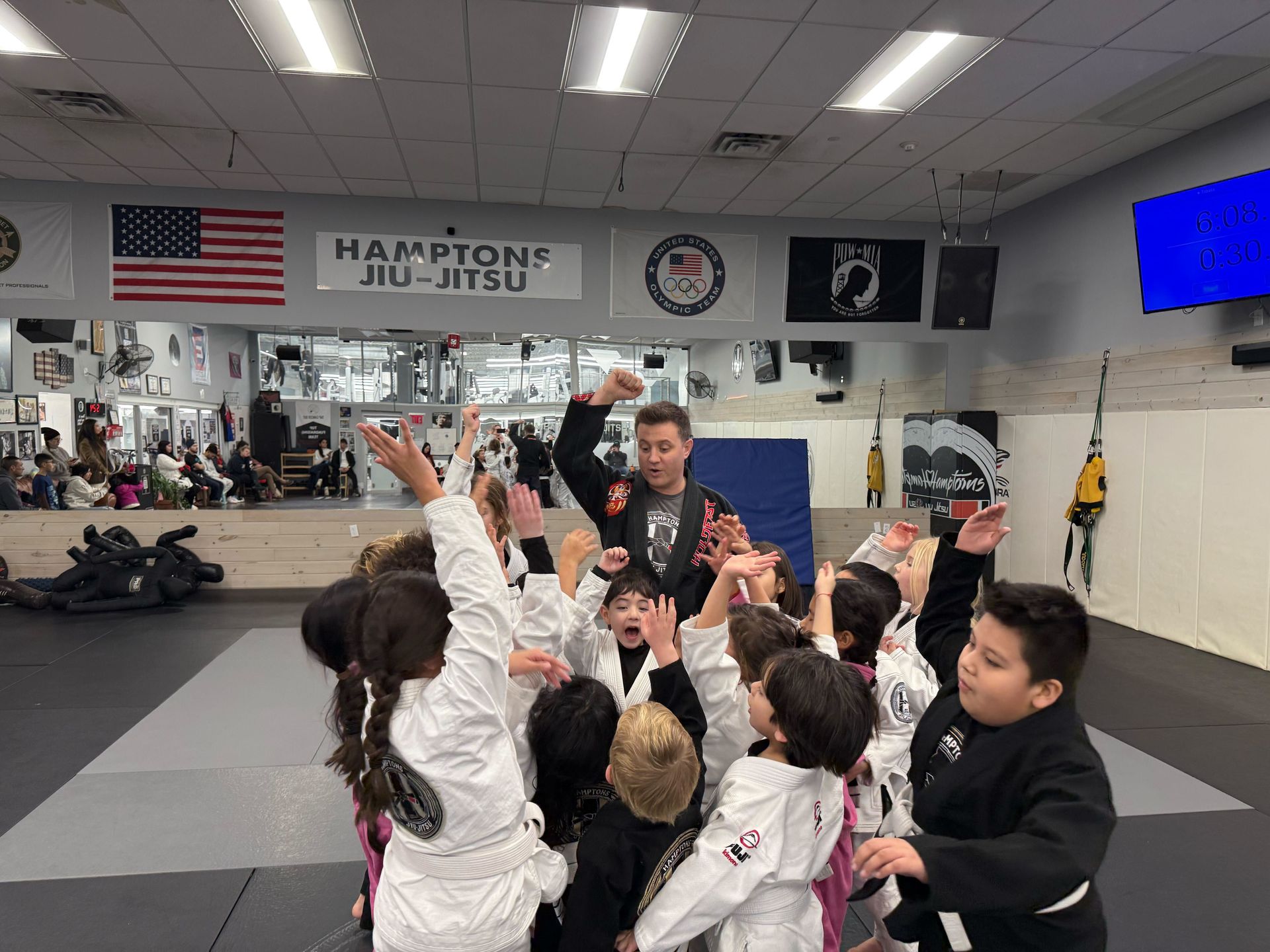
We finish by calming the room down, reviewing what we learned, and reinforcing good behavior. Kids tend to remember how something ends. When the last few minutes feel encouraging and clear, your child leaves feeling capable, not stressed.
Will your child spar on day one?
Usually not in the way most people imagine. We do not throw brand-new kids into full free sparring. Instead, we use beginner-friendly, constraint-based practice like light positional rounds or controlled drills where the start and goal are clearly defined.
Safety is built into the structure: coaching, boundaries, matched partners, and an emphasis on tapping and stopping immediately. Over time, as your child gains confidence and control, we gradually introduce more live practice in an age-appropriate way.
Safety, supervision, and the rules kids actually follow
Youth jiu jitsu is safest when the room is organized and the expectations are consistent. We enforce simple rules that protect everyone, like no roughhousing off the mats, listening during instruction, and respecting taps. We also teach kids how to use their voice, how to pause, and how to reset if something feels confusing.
We also pay attention to the emotional side of safety. A first class can feel like a lot, especially for younger kids. We coach with patience, redirect quickly, and make sure every child feels seen.
The benefits you can realistically notice early
Parents often ask what changes we see first. While every child is different, families commonly notice small wins within the first few weeks: better posture, more willingness to try, and a calmer response to frustration. Those may sound like tiny details, but in a busy family routine, they matter.
Research on youth Brazilian Jiu-Jitsu is also encouraging. Parent-reported outcomes in studies include improved confidence in about 96.4 percent of children, reduced anxiety in 87.5 percent, stronger commitment in 92.8 percent, and a sense of community in 100 percent. We do not promise exact results for every child, but we do build our coaching around the habits that create those outcomes.
How youth jiu jitsu supports anti-bullying skills without creating aggression
One of the best things about grappling-based training is that it teaches control and restraint. Kids learn that strength without control is not the goal. We reinforce self-control, awareness, and the ability to de-escalate.
When kids understand balance, grips, and escapes, they tend to carry themselves differently. That can reduce the likelihood of being targeted in the first place. And because we emphasize respect, taps, and boundaries, the training supports pro-social behavior instead of encouraging aggression.
What parents can do during and after the first class
You do not need to coach from the sidelines. In fact, the most helpful thing you can do is let us coach, and focus on keeping the experience positive. If your child looks unsure for a moment, that is normal. New environments take a minute.
After class, a simple check-in works well. Ask what was fun, what felt tricky, and what your child wants to learn next. Keep it light. Kids often open up more in the car ride home than they do right away on the mats.
Planning the next step: schedule, consistency, and expectations
If your child enjoys the first class, consistency is where growth happens. Most families aim for one to three classes per week, depending on school and season. Short, regular sessions tend to build confidence faster than occasional drop-ins, because kids remember the routine and feel ownership of their progress.
If you are looking at the class schedule, choose times that feel sustainable for your family. It is better to train consistently twice a week than to attempt an intense plan that becomes stressful. Youth jiu jitsu works best when it becomes part of your normal rhythm.
Ready to Begin
A first youth jiu jitsu class should feel like a smart introduction, not a test. We keep the structure clear, the coaching supportive, and the training age-appropriate so your child can learn real skills while enjoying the process.
When you are ready to try youth jiu jitsu in Southampton NY, we would love to welcome you to Hamptons Jiu-Jitsu and help your child take that first step with confidence, safety, and a community feel that keeps kids coming back.
New to martial arts? Start your journey with a beginner-friendly Brazilian Jiu-Jitsu class at Hamptons Jiu Jitsu.
ACCESS OUR SCHEDULE
& EXCLUSIVE WEB SPECIAL
Secure your spot and get started today with our EXCLUSIVE offer!