
Why Youth Jiu-Jitsu in Southampton Fosters Courage and Lasting Friendships
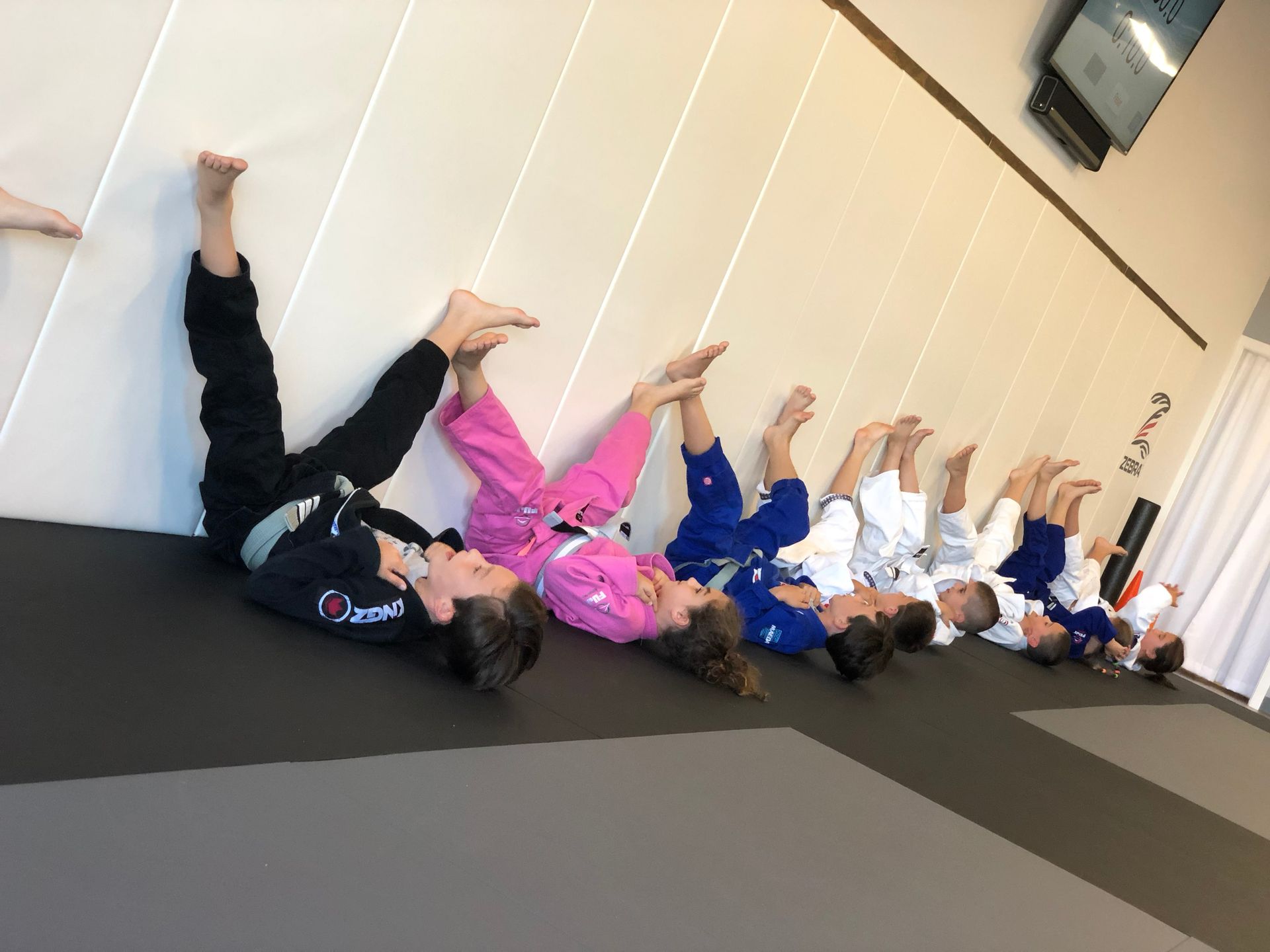
Youth Jiu-Jitsu turns everyday nerves into quiet confidence, one small win at a time.
When Southampton parents look for an activity that actually sticks, the goal usually is not just exercise. You want something your child can grow into, something that builds confidence in a way that shows up at school, at home, and around friends. That is one reason Youth Jiu-Jitsu has become such a strong fit for local families: it is structured, year-round, and it teaches kids how to handle challenge without panicking.
We also hear a lot of the same questions before a first class: Is Brazilian Jiu-Jitsu safe for kids? Will my child be forced to spar? What if my child is shy, anxious, or not “sporty”? Those are fair concerns. Our job is to make the program clear, progressive, and supportive so your child can learn at the right pace and still feel proud of what he or she is accomplishing.
In this guide, we will break down how Youth Jiu-Jitsu in Southampton NY builds courage through gradual challenge, how partner training naturally creates lasting friendships, and what you can expect from the first month on the mat, including how we keep classes age-appropriate and safety-focused.
Why courage grows faster in Youth Jiu-Jitsu than in “cheerleading confidence”
Confidence is easy to talk about, but real courage is different. Courage shows up when your child feels nervous and still tries. Youth Jiu-Jitsu creates that moment on purpose, then makes it manageable.
In class, kids face small, controlled challenges: balancing in a new stance, learning a safe way to fall, staying calm while a partner applies light pressure, or remembering a sequence when the brain wants to freeze. We keep the steps short and repeatable so your child experiences “I can do this” over and over. That is not hype, that is evidence.
The psychology of “small wins” on the mat
Courage is not a personality trait your child either has or does not have. It is a skill. The mat gives kids immediate feedback, and feedback builds self-trust.
We see it in the little moments: a child who used to avoid eye contact starts raising a hand to volunteer. A child who used to quit after one mistake starts trying again because everyone else is trying again too. Nobody becomes fearless overnight, but kids do become steadier. That steadiness is the foundation of real confidence.
Staying calm under pressure without forcing intensity
Brazilian Jiu-Jitsu in Southampton works especially well for teaching composure because the art is built around leverage, control, and problem-solving. Kids learn to breathe, frame, and think through positions rather than flailing. Our instruction emphasizes control and timing, not “winning” at any cost, so the pressure stays appropriate.
When a child learns that feeling stuck is not the end of the world, a lot of everyday stress starts to shrink. School presentations, social awkwardness, even frustrating homework sessions can feel more manageable when your child has practiced working through discomfort in a safe environment.
How Youth Jiu-Jitsu creates lasting friendships in a partner-based sport
It sounds counterintuitive to some parents: How can a combat sport be one of the best places to make friends? The answer is in the structure. Youth Jiu-Jitsu is partner-based, cooperative by design, and the friendships form through repetition and shared progress.
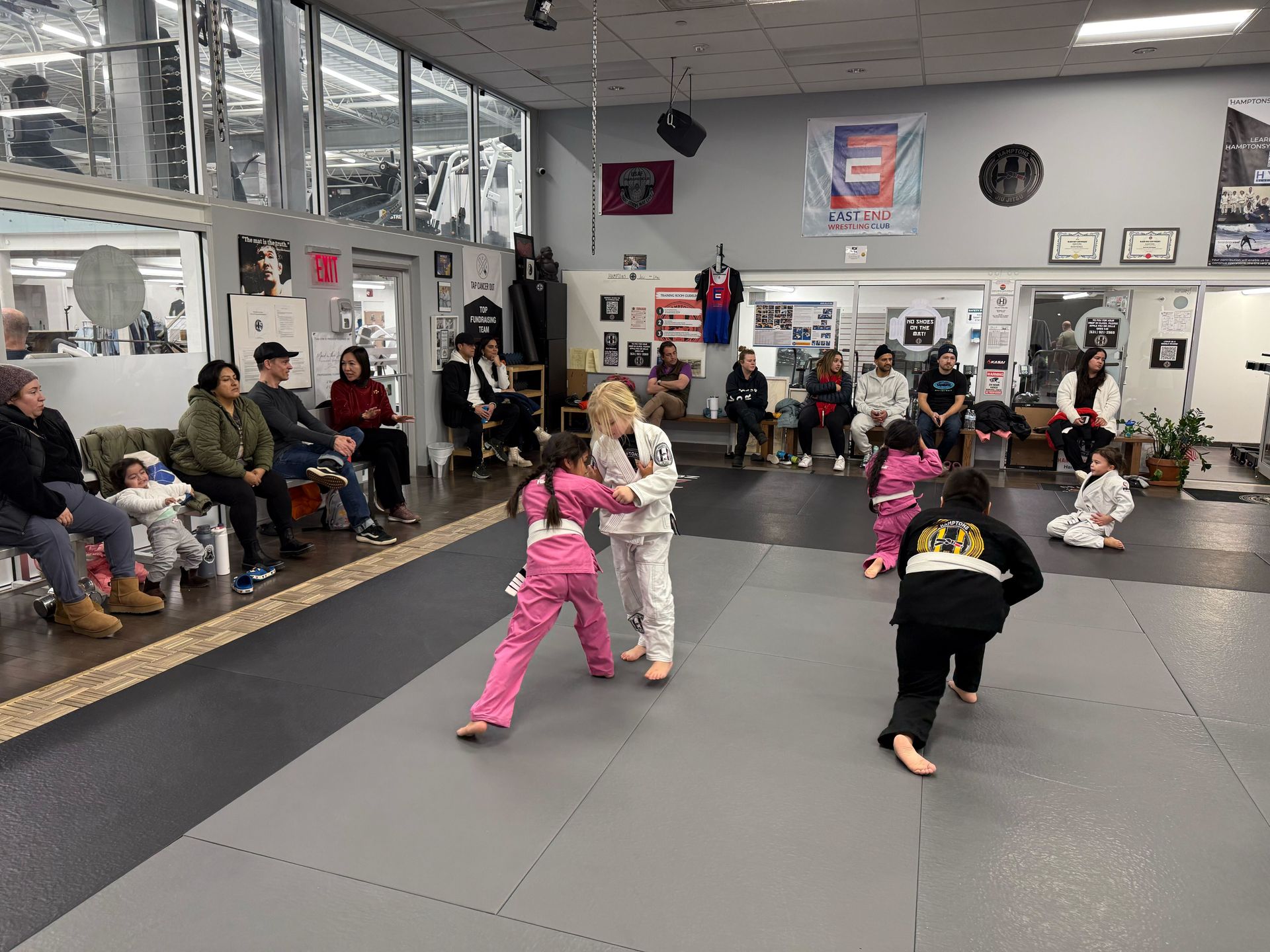
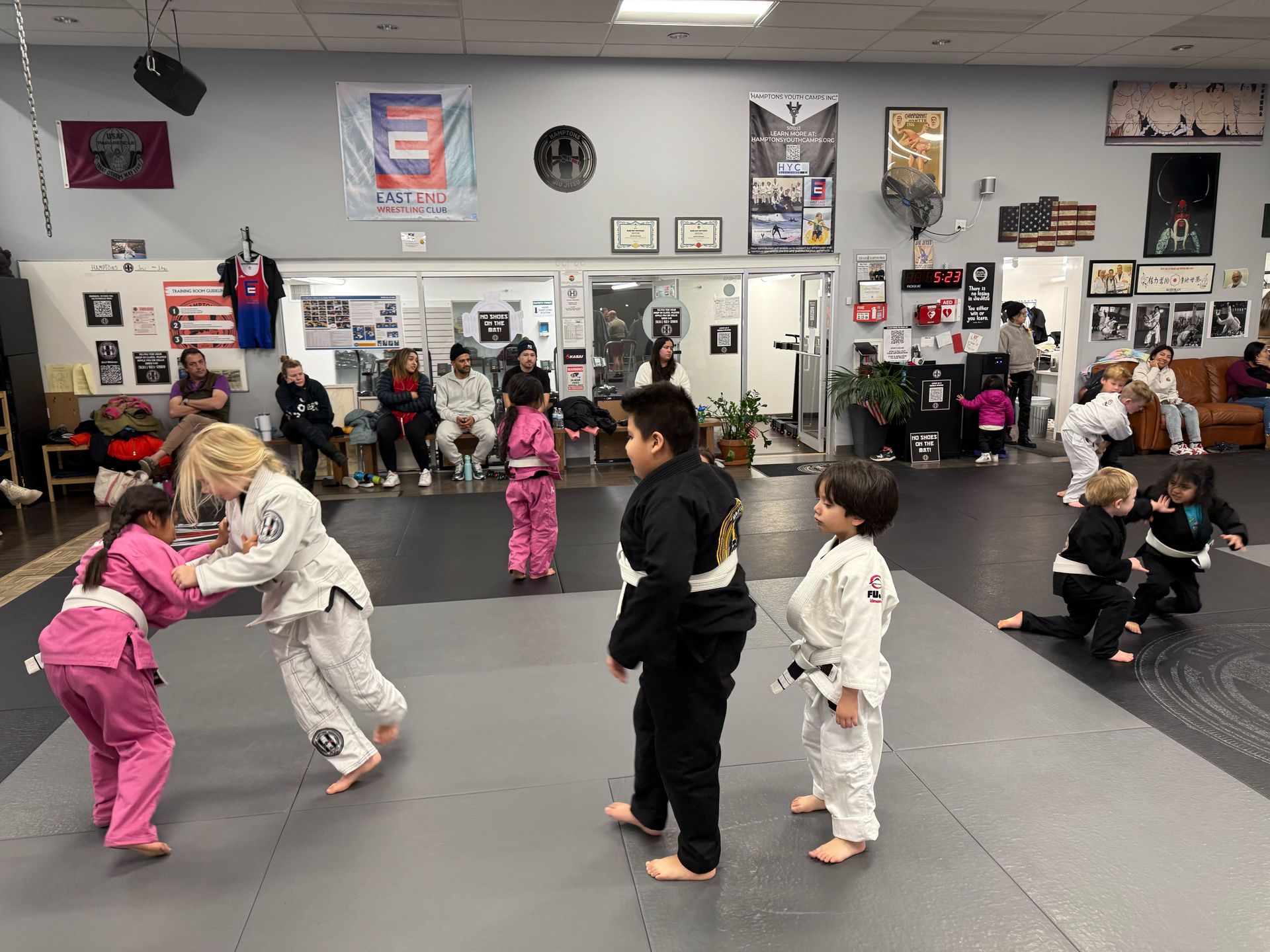
Kids rotate partners, learn each other’s names, and help each other drill. Even when kids are “competing” in a controlled round, success depends on cooperation: tapping early, using good control, and resetting respectfully. That creates trust quickly.
Trust is built into the rules
Friendships form when kids feel safe with each other. The tap-out rule is a big part of that. Tapping is not losing. Tapping is communication, and learning to communicate clearly with a partner is an underrated social skill.
We coach kids to respect the tap instantly, to avoid cranking, and to prioritize control over force. Over time, kids learn, “My partner is not here to hurt me. My partner is here to help me learn.” That mindset is where real friendships start.
Shared goals make shy kids feel included
Some kids make friends easily. Some kids do not. Youth Jiu-Jitsu gives shy kids a built-in script for social connection: drill together, ask a quick question, celebrate a small improvement. You do not have to be loud to belong here.
We see plenty of “quiet confidence” develop, where a child becomes socially comfortable not by becoming the most outgoing kid in the room, but by becoming competent and consistent. When kids feel capable, they participate more, and participation leads to connection.
Safety and structure: what parents should know about Youth Brazilian Jiu-Jitsu
No contact sport is risk-free, and we never pretend otherwise. What we can do is coach responsibly, build skills progressively, and keep the room structured so kids are not improvising intensity.
Youth participation in Brazilian Jiu-Jitsu appears to be growing, and pediatric injury research has shown a statistically significant rise in BJJ-related emergency department visits between 2012 and 2021, which researchers attribute in part to increased participation nationally. The same line of research also found most youth BJJ injuries treated in emergency departments did not require hospital admission, and sprains and strains were the most common diagnosis. Reported commonly affected areas included the head, shoulder, and lower arm, which reinforces why fundamentals, supervision, and age-appropriate drilling matter.
Competition data offers more context too. In one competition study, athletes 15 and younger showed an injury incidence of 4.1 per 1,000 exposures, which was lower than rates reported for several other combat sports included in that comparison. Data is not destiny, but it supports what good coaching already prioritizes: control, rules, and progression.
How we keep training age-appropriate
We manage safety with a few non-negotiables: supervision, clear boundaries, and skill progressions that match age and experience. Beginners learn positions and escapes before anything that resembles hard sparring.
We also build “mat awareness” early. Kids learn where their body is in space, how to fall safely, and how to move around other pairs without collisions. Those skills reduce chaotic moments, which is where many injuries in youth sports tend to happen.
Will your child have to spar right away?
No. Most kids start with fundamentals: movement, posture, grips, and simple positional games. When we do introduce live training, it is controlled, time-limited, and coached. You should expect guidance, not a free-for-all.
Our goal is to help your child enjoy the process and feel successful, because consistency is what produces courage and friendships over time.
Why Southampton families choose Youth Jiu-Jitsu as a year-round anchor activity
Southampton has seasonal rhythms. Schedules change in summer, school-year routines tighten up, and families often want something dependable that does not disappear when the weather shifts. Youth Jiu-Jitsu in Southampton NY works well as a consistent routine because classes run year-round indoors, and progress is measurable even if your child trains modestly.
We also appreciate that families want an activity that supports the whole child. Fitness is a bonus, but parents often care more about focus, emotional regulation, and social development. Our classes are designed to build physical literacy while also teaching kids how to listen, take turns, and keep trying when something is hard.
Discipline without the harshness
Discipline should not feel like intimidation. In our youth classes, discipline means showing respect, following instructions, and learning to be a good partner. It is the kind of structure that helps kids settle in, not the kind that makes kids anxious.
When the room is organized, kids relax. And when kids relax, learning speeds up.
What your child learns in the first month of Youth Jiu-Jitsu
Parents like specifics, and kids do too. The first month is about building comfort: comfort on the mat, comfort with a partner, and comfort with the idea that mistakes are normal.
Here is what many beginners work on early:
1. Mat etiquette and safety habits like how to line up, how to listen, and how to “tap” clearly
2. Movement fundamentals like base, balance, and safe ways to get up and down
3. Simple positional concepts like top and bottom, maintaining space, and using frames
4. Basic escapes that teach problem-solving under light pressure
5. A few beginner-friendly controls that emphasize leverage rather than strength
6. Drilling with partners to learn cooperation and timing
7. Introductory, coach-guided positional games where the goal is learning, not dominance
That month is usually when parents notice the first real changes. Your child starts talking about class on the way home. Posture improves. Small frustrations become easier to handle. And very often, you will hear your child mention a classmate by name, which is a quiet sign that friendships are forming.
How often should kids train each week?
Consistency matters more than intensity. For many families, two classes per week is a sweet spot for skill retention and confidence-building without burning out. Some kids thrive with more, especially if the schedule allows and the child is asking for it.
We encourage you to start with a rhythm your family can realistically keep. Youth Jiu-Jitsu rewards repetition. If your child trains steadily, even at a moderate pace, progress becomes obvious.
What to wear to the first class (and how to make day one easier)
For a first visit, simple is best. If your child does not have a uniform yet, comfortable athletic clothing usually works well for an introduction class. Avoid anything with zippers, hard buttons, or sharp elements that could scratch a training partner.
A few practical tips that help kids settle in quickly:
• Arrive a few minutes early so your child can see the space and breathe before class starts
• Bring a water bottle and tie back long hair
• Encourage your child to focus on listening, not being perfect
• Let us know about any concerns, from anxiety to past injuries, so we can coach appropriately
First classes are often a little overwhelming, and that is normal. The good news is that the structure of Youth Jiu-Jitsu tends to make kids feel oriented quickly.
How Youth Jiu-Jitsu supports self-defense without turning kids aggressive
Parents want practical self-defense, but you also want your child to stay kind. Brazilian Jiu-Jitsu in Southampton is well suited for this because it emphasizes control and de-escalation. Kids learn how to manage distance, how to escape unsafe positions, and how to use technique instead of panic.
Just as important, we talk about decision-making: when to get an adult, when to leave, and how to use skills responsibly. The goal is not to create tougher bullies. The goal is to create kids who feel secure enough not to prove anything.
Take the Next Step
If you want an after-school activity that builds real courage and real friendships, Youth Jiu-Jitsu checks a lot of boxes for Southampton families: structured progress, supportive partner work, and a skill set that carries into everyday life. The best way to know if it fits your child is to see how our classes feel in person and how your child responds to the environment.
We have built our youth program at Hamptons Jiu-Jitsu to be welcoming for beginners, challenging in the right ways, and consistent throughout the year. When your child feels safe, coached, and included, growth tends to happen naturally, and the friendships often come along with it.
Take your first step onto the mats and begin training at Hamptons Jiu-Jitsu today.
ACCESS OUR SCHEDULE
& EXCLUSIVE WEB SPECIAL
Secure your spot and get started today with our EXCLUSIVE offer!