Why Youth Jiu Jitsu Inspires Confidence in Southampton Tweens
Youth Jiu-jitsu gives tweens a place to practice courage in small moments until it starts showing up everywhere else.
Tweens in Southampton are in a unique in between stage: old enough to feel social pressure deeply, young enough to still be figuring out how to respond to it. In our experience, youth jiu jitsu is one of the clearest ways to help that age group build real confidence, because progress is visible, earned, and repeatable.
Confidence is not a pep talk. It is the quiet belief that you can handle something hard without falling apart. Our youth jiu jitsu classes are built around that idea: structure, coaching, safe training partners, and realistic challenges that meet your tween where your tween is.
If you are looking into martial arts in Southampton because you want your child to speak up more, worry less, move with better coordination, or just feel steadier in social situations, we can help you understand what actually changes and why it tends to stick.
Why confidence looks different at ages 10 to 12 in Southampton
In the tween years, confidence is often situational. Your child may feel completely fine at home and then freeze in a group, or do great academically and still feel unsure in a hallway interaction. Around ages 10 to 12, kids start comparing themselves more, and that comparison can quietly shape posture, eye contact, and willingness to try new things.
Southampton brings its own mix of pressures. School expectations can be high, activities are packed, and the seasonal energy of the Hamptons can make social circles feel even more intense. Add screen time and constant messaging, and many kids get fewer chances to practice real, face to face problem solving.
Youth jiu jitsu in Southampton NY gives tweens something refreshingly concrete: a skill-based environment where effort matters more than popularity, and where mistakes are expected, not punished.
What youth jiu jitsu actually teaches, beyond techniques
A lot of parents start by asking about self-defense, which makes sense. But the bigger story is how confidence is trained through repetition and feedback. Brazilian Jiu-Jitsu rewards calm thinking, body awareness, and persistence. You do not need to be the biggest or the loudest. You need to keep showing up and stay coachable.
Our classes are structured so your tween learns in layers. First comes basic movement and safety, then positional control and escapes, then controlled sparring where kids learn how to stay composed when something does not go their way. That cycle is where confidence grows.
Research on youth Brazilian Jiu-Jitsu consistently points to confidence gains. In recent studies, roughly 87.6 to 96.4 percent of participants or parents reported improved confidence, and many also noted reduced anxiety and improved commitment and mental flexibility. Those numbers track closely with what we see day to day when students stick with the process.
Small wins create believable confidence
One reason youth jiu jitsu works so well for tweens is that it creates frequent, measurable wins. A win is not always a medal. Often it is escaping a hold that used to feel impossible, remembering a sequence under pressure, or staying respectful after a tough round.
Each small win teaches your child, I can learn this. I can improve. And because those wins come from practice rather than luck, the confidence feels real.
The role of resilience: learning to recover instead of quitting
Tweens do not just need encouragement. Many need a safe place to learn how to recover after a setback. On the mats, setbacks happen in a normal, controlled way. You get stuck, you tap, you reset, you learn.
That matters because resilience is not the ability to avoid discomfort. It is the ability to move through it without spiraling. Controlled sparring, when coached well, becomes a resilience lab. Students learn to breathe, think, and try again.
We also emphasize a growth mindset. If something does not work, we do not label your tween as unathletic or not confident. We treat it as information: your timing is off, your base is narrow, your grip needs adjusting. That simple shift keeps kids from taking failure personally.
Anxiety, pressure, and the calm that comes from structure
Many tweens carry a low hum of stress. It might not show up as big worry. It can show up as irritability, avoidance, or that shut-down feeling before social events. Martial arts in Southampton can help, but youth jiu jitsu is especially effective because it is both physical and problem-solving based.
There is a routine to class: warmup, drilling, partner work, situational training. Predictable structure gives anxious kids a map. And during training, students have to be present. When you are learning how to move your hips, frame correctly, or escape from underneath, you cannot multitask in your head the same way.
Studies have reported reduced anxiety for many youth participants, with one set of findings noting about 87.5 percent reporting anxiety reduction. We never promise outcomes in a fixed timeline, but we do see a common pattern: consistent attendance leads to calmer reactions, better emotional regulation, and more steady behavior under pressure.
Social confidence for shy kids: partner work without the awkwardness
One of the quiet strengths of youth jiu jitsu is that it creates social contact with built-in purpose. Your tween does not have to figure out how to make small talk. Partners greet, drill, switch, and help each other improve. The conversation is natural: Where do your hands go? Try it this way. Want to go again?
Because the work is cooperative, kids learn empathy. You cannot train well if you treat partners poorly. That social skill transfers. Parents often tell us that school interactions start feeling less intimidating because their child has practiced respectful communication in class dozens of times.
We also create a culture where helping newer students is normal. That is another confidence multiplier: when your child becomes the one explaining a drill to a newer student, self-belief changes quickly.
Anti-bullying skills that focus on safety and awareness
When parents ask about bullying, we take the question seriously and keep the answer practical. The goal is not to turn your tween into a fighter. The goal is to help your child understand boundaries, awareness, and how to get safe.
Youth jiu jitsu teaches positional control and escapes. That means learning how to create space, stand up safely, and avoid panic if someone grabs or pushes. It also teaches kids how quickly things can escalate when emotions spike, which often makes students less aggressive, not more.
Martial arts research frequently shows improvements in social behavior and reductions in aggressiveness when programs emphasize respect and self-control. That is the approach we take: confidence with humility, and skills with responsibility.
Focus and follow-through: why the training helps at school
A big reason families choose youth jiu jitsu in Southampton NY is focus. On the mat, attention matters. If you are not listening, you miss details. If you rush, you lose balance. That immediate feedback trains patience and follow-through.
In studies, many parents report improved concentration and commitment, with some reporting around 78.6 percent noticing better concentration and over 90 percent noting mood improvement and life skill transfer. Again, the exact experience varies by child, but the direction is consistent: structured practice helps kids sustain effort.
We also like how jiu jitsu rewards problem solving. A position is a puzzle. Your tween learns to test an idea, feel what happens, and adjust. That flexible thinking is useful in academics, friendships, and stressful moments.
What a typical tween class feels like in our academy
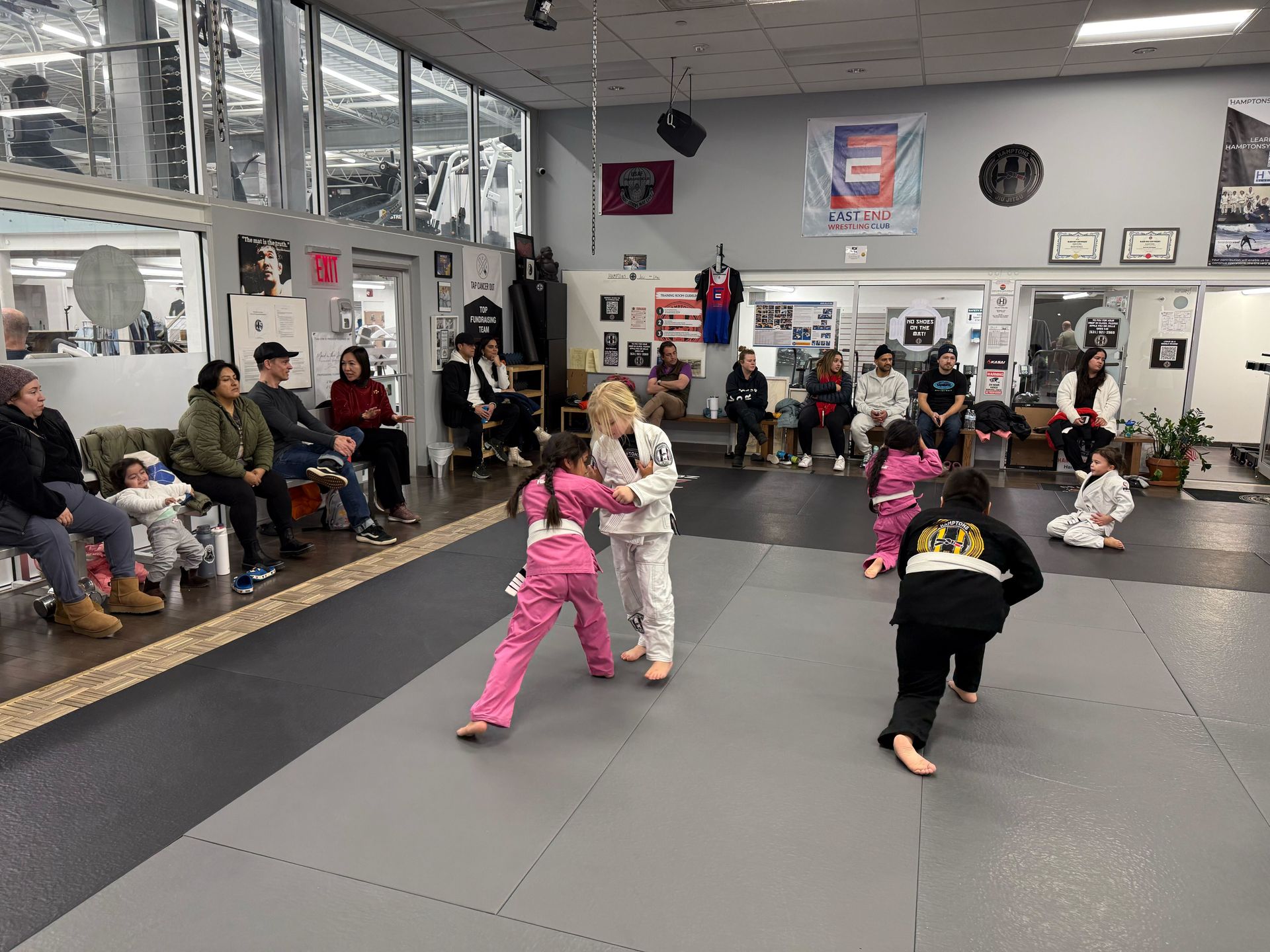
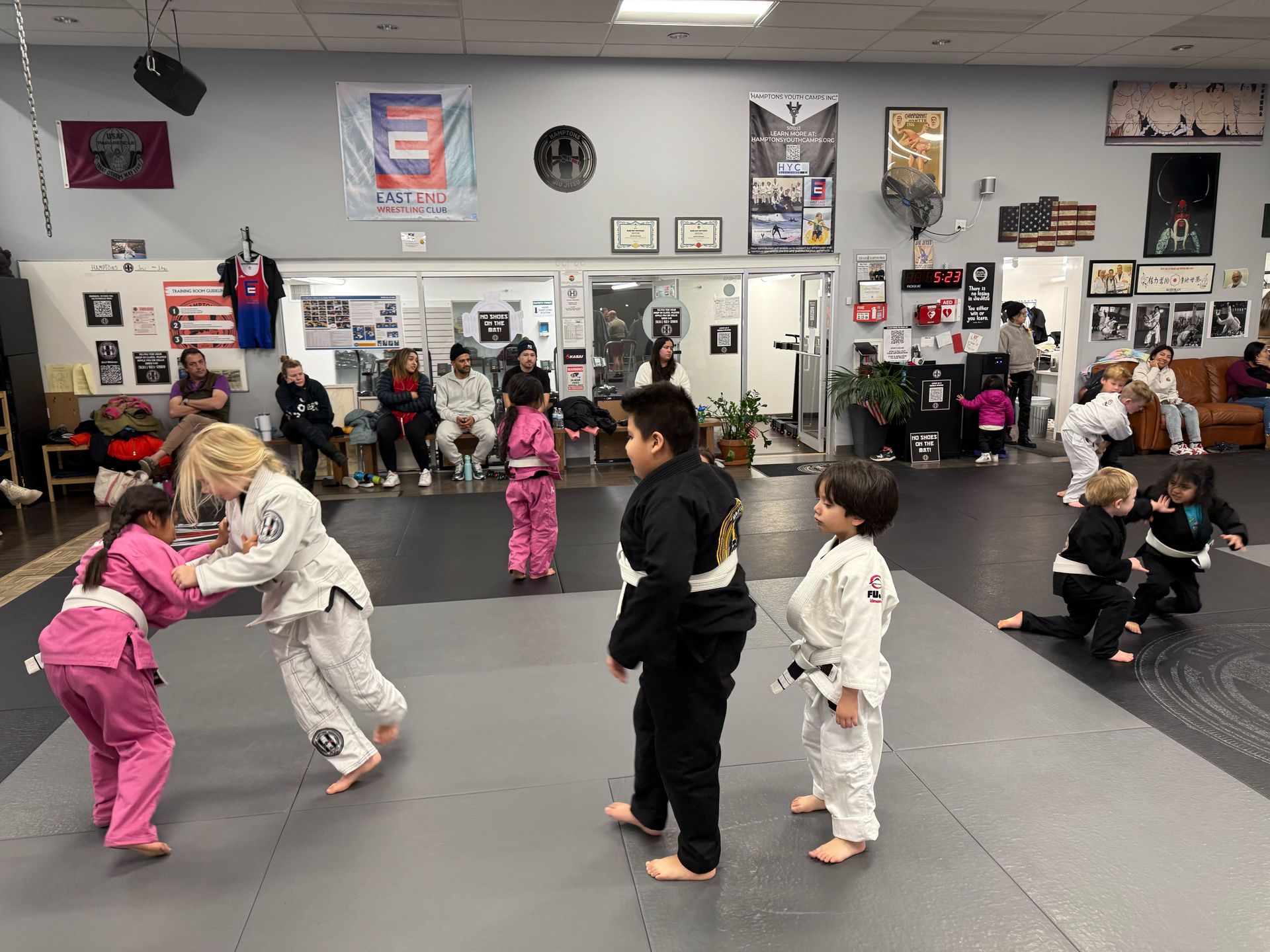
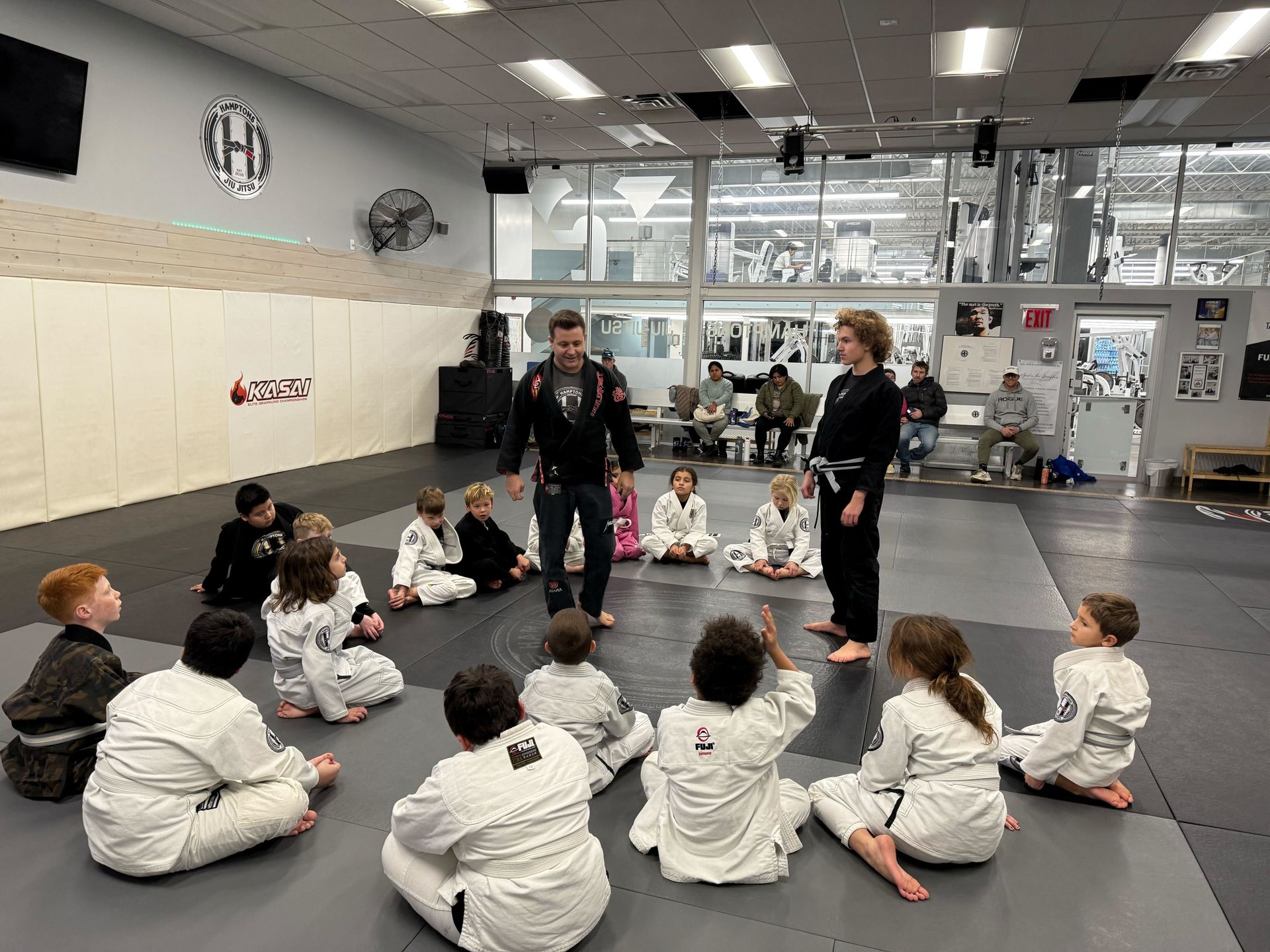
Parents sometimes worry that class will be intimidating, especially for a beginner. We design the experience to be welcoming and clear. The room has energy, but it is not chaotic. Kids are moving, learning, laughing a little, and concentrating a lot.
A common first-day experience looks like this: your tween is a bit unsure during warmups, starts to relax during drilling, and then surprises themselves during a simple positional game because it feels like learning through play. By the end, most beginners are tired in a good way, the kind of tired that comes with accomplishment.
We keep safety standards high. Training is supervised, tapping is taught early, and partner matching matters. Confidence only grows when kids feel safe enough to try.
How to know if youth jiu jitsu is a good fit for your tween
Most tweens can thrive in youth jiu jitsu, including kids who are shy, not sporty, or new to martial arts in Southampton. The best indicators are less about athleticism and more about readiness to participate respectfully in a group.
Here are a few signs your child is likely ready:
- Your tween can follow basic instructions even when excited or nervous
- Your child can handle light physical contact in a structured setting
- Your tween can take correction without feeling personally attacked
- Your child is open to trying again after making a mistake
- Your tween is curious about learning real skills, not just “winning”
If you are unsure, that is normal. A trial class usually answers the question quickly because you can see how your child responds to the environment.
A simple timeline: what confidence gains can look like over 12 weeks
Every child is different, but confidence tends to build in phases. If your tween trains consistently, many families notice changes within the first couple of months.
1. Weeks 1 to 2: Comfort and routine. Your tween learns the basics, names, and class flow, and nerves start to settle.
2. Weeks 3 to 6: First real breakthroughs. Escapes start working, coordination improves, and your child begins to anticipate what comes next.
3. Weeks 7 to 12: Ownership. Your tween remembers details, helps partners, and handles sparring with more calm and self-control.
This is why we often recommend starting with one to two classes per week and staying consistent. Confidence does not usually arrive in one dramatic moment. It accumulates.
Take the Next Step
Building confidence in the tween years is partly about giving kids a place to practice being uncomfortable in a safe way, and youth jiu jitsu does that better than almost anything else we have seen. When students learn to breathe under pressure, solve problems with their bodies, and treat partners with respect, the changes show up in posture, voice, and daily choices.
If you want a program that blends practical self-defense, community, and measurable progress, we built our tween training to meet Southampton families where life actually is: busy, social, demanding, and worth showing up for. At Hamptons Jiu-Jitsu, we keep the path clear, the coaching hands-on, and the environment supportive so your child can grow into steadier confidence.
Challenge your body and sharpen your mindset through martial arts training at Hamptons Jiu Jitsu.
ACCESS OUR SCHEDULE
& EXCLUSIVE WEB SPECIAL
Secure your spot and get started today with our EXCLUSIVE offer!