How Jiu Jitsu in Southampton Cultivates Focus, Strength, and Mindfulness
The best part of jiu jitsu is that you cannot multitask, which is exactly why it changes how you show up everywhere else.
In Southampton, life moves fast in a very particular way: long workdays, packed calendars, seasonal rushes, and plenty of time spent sitting at a desk or in a car. When your attention gets pulled in five directions, it is not just your mood that suffers. Your posture, breathing, sleep, and patience can start to fray too.
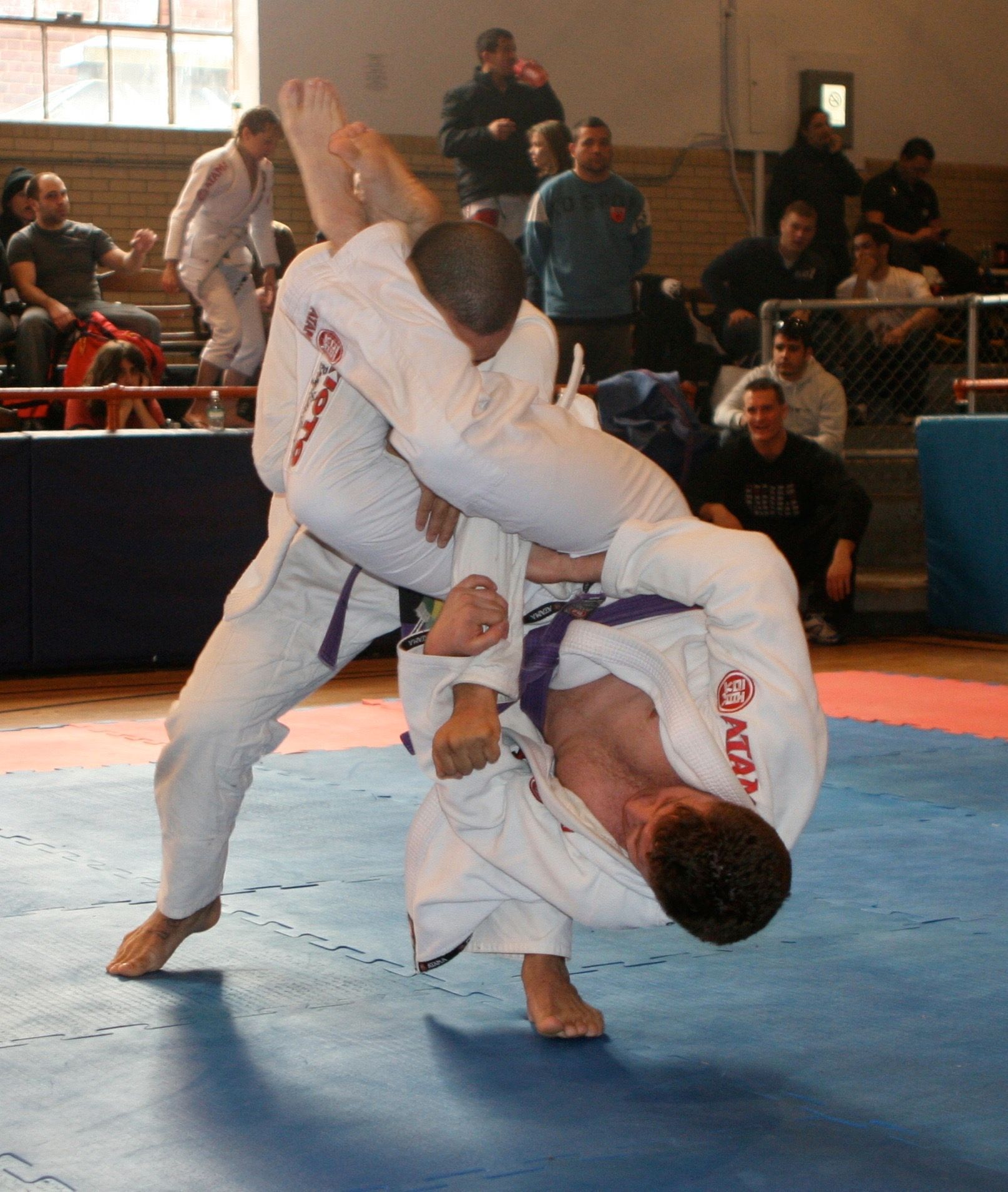
That is where jiu jitsu fits so well. On the mat, you are either present or you are getting swept, pinned, or gently reminded that your body is not interested in your email inbox. In our jiu jitsu classes, we see the same theme again and again: people come in for fitness or self-defense, and they stay because the training sharpens focus, builds usable strength, and creates a mindfulness that does not feel abstract.
We also lean on real outcomes, not just hype. Across our resources and practitioner surveys, adults report measurable shifts: 87.5% report reduced anxiety, 96.9% report better mood, 87.6% report improved confidence, 81.3% report enhanced mental flexibility, and 100% report a stronger sense of community and respect. Those numbers track with what we watch happen over weeks and months of consistent training, even for people who never plan to compete.
Why Jiu Jitsu Works So Well for Focus (Especially When Your Day Is Chaotic)
Focus is not only about concentration. It is the skill of selecting one thing, staying with it, and adjusting when reality changes. That is basically the definition of rolling, drilling, and problem-solving in live training.
In a typical class, we ask you to do one thing at a time: frame here, move your hips there, control the distance, breathe, and wait for the right moment. That might sound simple, but it is surprisingly rare in modern life. Training forces a kind of clean attention that carries over to the rest of your week.
Single-tasking, under pressure, becomes a habit
When someone is trying to pass your guard, your brain learns quickly that panic is expensive. You cannot flinch your way out of positions. You have to notice details, pick a response, and commit. Over time, your focus improves because you practice it repeatedly, with immediate feedback.
In Southampton, we see this land especially well for professionals and parents. The benefit is not that you become quieter or less ambitious. It is that you become harder to rattle. Conversations feel clearer. Decisions take less mental overhead. Even your breathing tends to settle faster when stress shows up.
Mental flexibility is trained, not wished for
One of the most underrated benefits is adaptability. If your first technique does not work, you transition. If your grip fails, you re-grip. If you end up on bottom, you build a base and recover. That constant adjustment is why 81.3% of practitioners report enhanced mental flexibility. It is baked into the training.
And the best part is that this is not theoretical. You feel it in real time: a small problem appears, you solve it, and you move on. That pattern becomes familiar, and then it becomes useful off the mat.
Strength That Actually Helps Your Body Move Better
A lot of people hear martial arts and picture brute force. The reality in jiu jitsu is more interesting. We develop strength through leverage, posture, alignment, and efficient movement. Yes, you get stronger, but you also learn how to use your strength without wasting it.
For many adults in Southampton, the first noticeable changes are not about looking shredded. They are about feeling less stiff getting out of the car, standing taller at your desk, and realizing your core is finally doing its job.
The kind of strength jiu jitsu builds
Jiu jitsu creates a mix of qualities that standard gym routines often separate: pulling strength, hip strength, rotational control, isometric endurance, and grip resilience. Because positions change constantly, your body learns to produce force from awkward angles, then relax, then produce force again. That on-off switch matters.
We also emphasize movement quality. If a technique requires muscling, we treat that as a sign to fix mechanics. The goal is sustainable training that keeps your joints happy while still challenging you.
Mobility, posture, and the desk-work reset
If you spend hours seated, your hips tighten, your shoulders round forward, and your neck starts doing too much. Training gives you repeated reps of opening the hips, rotating the spine, and stabilizing the shoulder girdle in practical ways. You do not need to memorize anatomy to feel the difference.
Many students tell us their posture improves simply because the positions demand it. If your spine collapses, you get flattened. If your base is unstable, you get swept. Over time, your body learns a better default.
Breathing under pressure is a physical skill
Strength is not only muscles. It is also control. In jiu jitsu, you learn to breathe while someone is applying pressure, which is a very real stimulus. When you can breathe, you can think. When you can think, you can move.
That skill often shows up later as better sleep and better recovery. Not because training is a magic pill, but because your nervous system gets practice returning to calm after intensity.
Mindfulness Without the Guesswork
Mindfulness can sound like something you add to your life, if you can find time. On the mat, mindfulness is more like something that happens because it has to.
When you train, you pay attention to contact points, balance, timing, and your own emotional response. You notice when frustration spikes. You notice when you hold your breath. Then you practice doing something else instead: relax the jaw, slow the exhale, reframe the position, keep working.
This is one reason adult practitioners report major mental health benefits, including 87.5% reduced anxiety and 96.9% improved mood. Training gives you a reliable way to interrupt spirals: focus on the next controllable action.
Calm is trained in rounds, not in slogans
Controlled sparring is where mindfulness becomes practical. You get exposure to discomfort in a safe environment, and you learn to stay composed. That is emotional regulation with a clear scoreboard: either you kept your composure and escaped, or you tensed up and made it worse.
Over time, you build trust in your ability to handle intensity. That trust is where confidence comes from, and it matches the reported 87.6% improvement in confidence across practitioner data.
What a Beginner-Friendly Jiu Jitsu Path Looks Like in Southampton
Most adults are not looking to become professional athletes. You want something that fits your schedule, meets you where you are, and feels like progress instead of punishment.
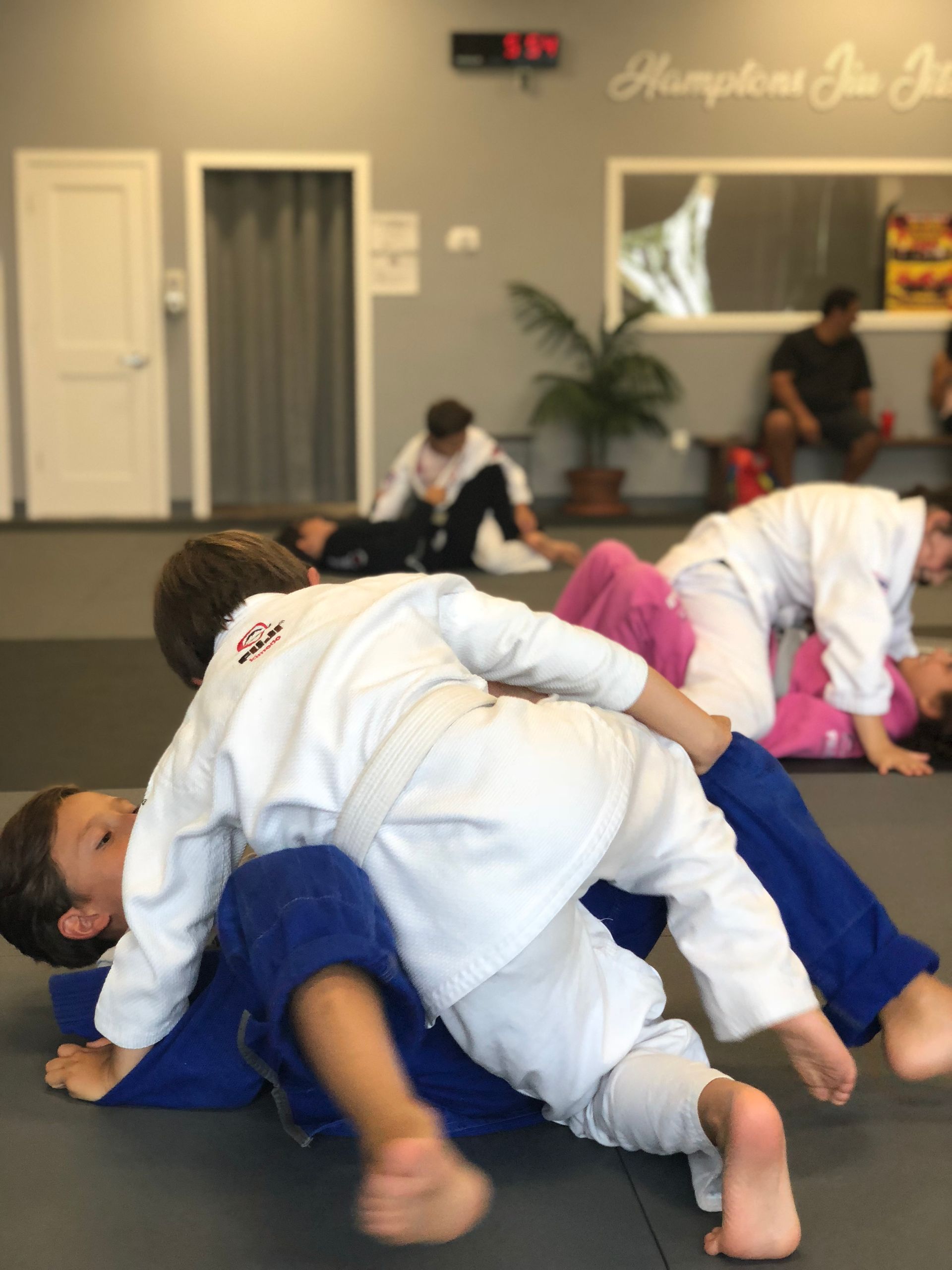
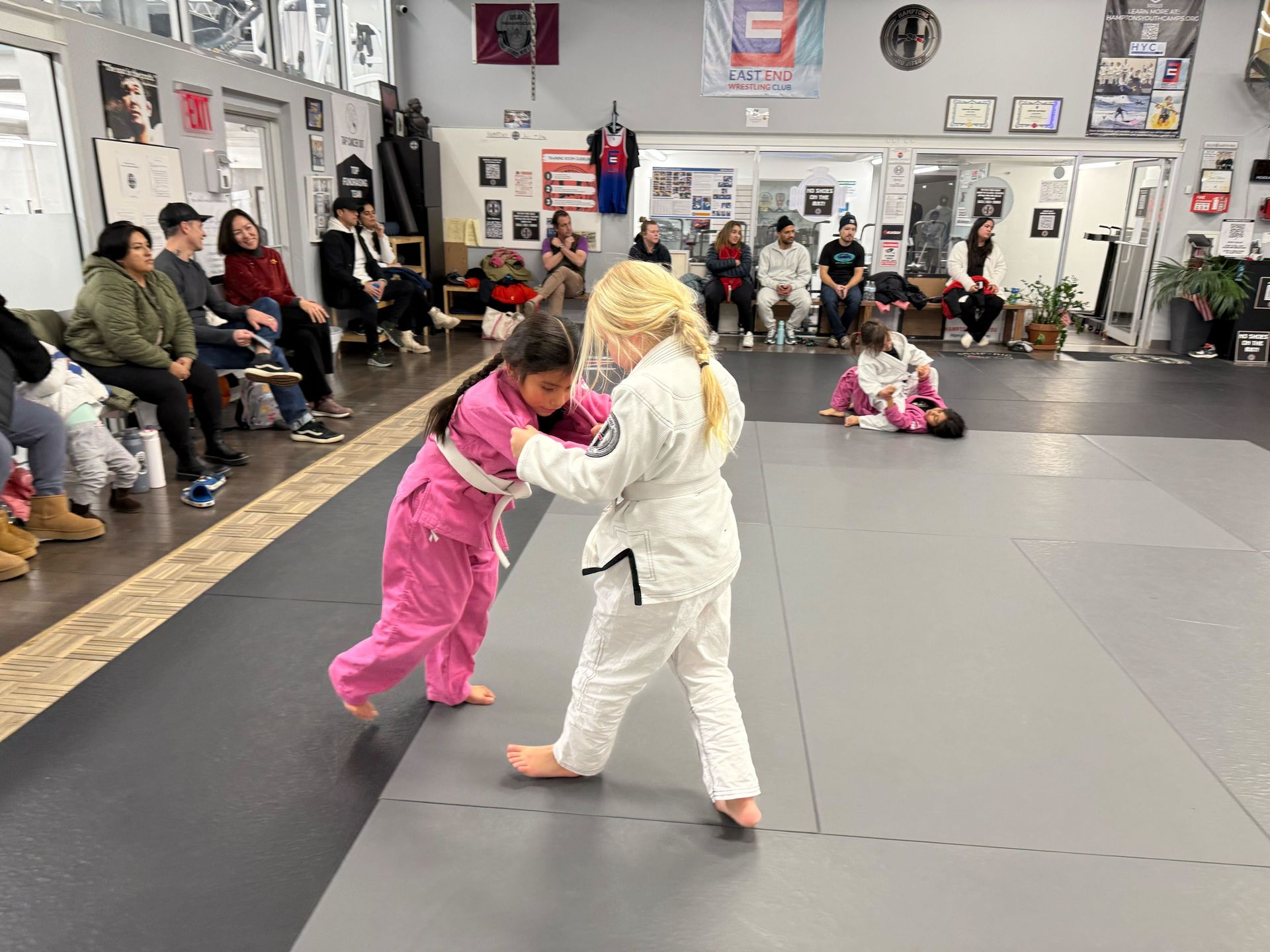
We structure training so beginners can step in without needing to be in shape first. You learn positions, concepts, and safety before intensity ramps up. Rolling is introduced progressively, with guidance on how to move with control and respect.
Here is what many people experience as they settle into jiu jitsu in Southampton:
1. Weeks 1 to 2: You learn how to move safely, how to tap, and how to survive common positions without panicking.
2. Weeks 3 to 6: Your body awareness improves, your confidence rises, and your conditioning starts to catch up to the demands.
3. Around 3 months: You recognize patterns, you feel part of the room, and training becomes a reliable reset for stress.
4. Long-term: Your resilience increases, your self-control improves, and you start using jiu jitsu as a way to stay sharp for life, not just for class.
This timeline is not a promise, and everybody adapts at their own pace, but it is a realistic picture of how skill-based training tends to unfold.
A Schedule That Fits Real Life (Without Needing to Live at the Gym)
In a place like Southampton, the obstacle is not motivation. It is bandwidth. The good news is that you do not need marathon sessions for jiu jitsu to work.
Many adults train one to two times per week and still report meaningful benefits in mood, resilience, and stress relief. Research highlighted across our resources also points to resilience gains with consistent weekly training, and we see that consistency beat intensity almost every time.
If you want a simple approach that works, we usually recommend:
- Start with two classes per week for the first month to build momentum and familiarity
- If your schedule is tight, protect one class per week as non-negotiable
- Add a third day only when your recovery and stress levels are stable
- Use the class schedule page to plan ahead so training stays realistic, not aspirational
The point is sustainability. You should leave class challenged, not wrecked.
Community, Respect, and Why People Keep Coming Back
The physical and mental benefits are real, but the social piece is what makes training stick. In practitioner surveys cited across our resources, 100% report a stronger sense of community and respect. That is a striking number, and it makes sense when you understand the culture.
You cannot train jiu jitsu alone. You rely on partners to drill, to roll safely, and to improve. That creates a rare environment where people are present with each other, working on something difficult, and doing it with mutual care. It is not forced. It is built into the process.
In Southampton, that community can be a powerful counterweight to isolation, especially for busy professionals, parents, veterans, and first responders who carry a lot and do not always have an outlet that feels constructive.
What You Will Actually Learn in Our Jiu Jitsu Classes
Technique matters, but so does knowing what training is made of. In our program, we focus on skills you can feel immediately and build on over time:
• Positional fundamentals like base, posture, and pressure so you can stay safe and stable
• Escapes from common pins so you learn how to stay calm and create space
• Guard concepts that teach distance management and smart use of your legs and hips
• Submissions taught with control, emphasizing precision and partner safety
• Live rounds that are scaled to your experience so you develop timing without chaos
That blend is why jiu jitsu in Southampton NY can be both practical and surprisingly meditative. You work hard, but your mind gets quieter because it has one job.
Take the Next Step
If you want training that improves your attention, strengthens your body in a way that supports everyday movement, and builds real mindfulness under pressure, we have built our programs to deliver exactly that. The mix of structure, technique, and supportive intensity is what makes the results stick, whether your goal is stress relief, self-defense, or simply feeling better in your own skin.
When you are ready to experience jiu jitsu Southampton training in a way that fits Southampton life, we would love to welcome you to Hamptons Jiu-Jitsu and help you get started with a plan that feels doable from week one.
Ready to start your martial arts journey? Join a Brazilian Jiu-Jitsu class at Hamptons Jiu-Jitsu today.
ACCESS OUR SCHEDULE
& EXCLUSIVE WEB SPECIAL
Secure your spot and get started today with our EXCLUSIVE offer!