Youth Jiu Jitsu vs. Other Sports: Which is Best for Southampton Kids?
Youth jiu jitsu gives Southampton kids a rare mix of fitness, focus, and real-world confidence that shows up far beyond the mats.
Choosing an activity for your child in Southampton can feel oddly high-stakes. Schedules fill fast, seasons overlap, and the pressure to pick the “right” sport creeps in quickly. We see that decision point all the time, especially for ages 4 to 12, when kids are still figuring out what they enjoy and what helps them thrive.
That’s where youth jiu jitsu stands out. It’s not just “another sport” added to the calendar. Our classes are structured to build athleticism, emotional control, and practical self-defense in a way kids can actually understand and use. And because progress is individual, your child isn’t stuck depending on a team roster, a coach’s lineup choices, or a short season to feel successful.
In this guide, we’ll compare youth jiu jitsu to common youth sports and explain what makes our program a strong fit for Southampton families looking for confidence, discipline, and a supportive community.
Quick comparison: Youth jiu jitsu vs. popular Southampton sports
Families often ask us for a clear, side-by-side view. Here’s a simple way to think about the differences.
• Fitness development: Our training builds coordination, balance, agility, strength, flexibility, and cardio together, not just one or two areas.
• Mental skills: Kids practice problem-solving under pressure, staying calm when things feel uncomfortable, and trying again when a technique doesn’t work the first time.
• Social environment: Students partner up, rotate, and learn respectful communication, so kids make connections without the “winner gets attention” dynamic.
• Practical safety: We teach age-appropriate self-defense concepts like positioning, escapes, and how to stay safe if someone grabs or pushes.
• Schedule flexibility: You can use the class schedule to build consistency without the travel and weekend commitments that swallow entire seasons.
That doesn’t make other sports “bad.” It just explains why youth jiu jitsu in Southampton NY has become such a strong option for families who want something steady, skill-based, and genuinely transferable to everyday life.
Why jiu jitsu feels different from a traditional sport
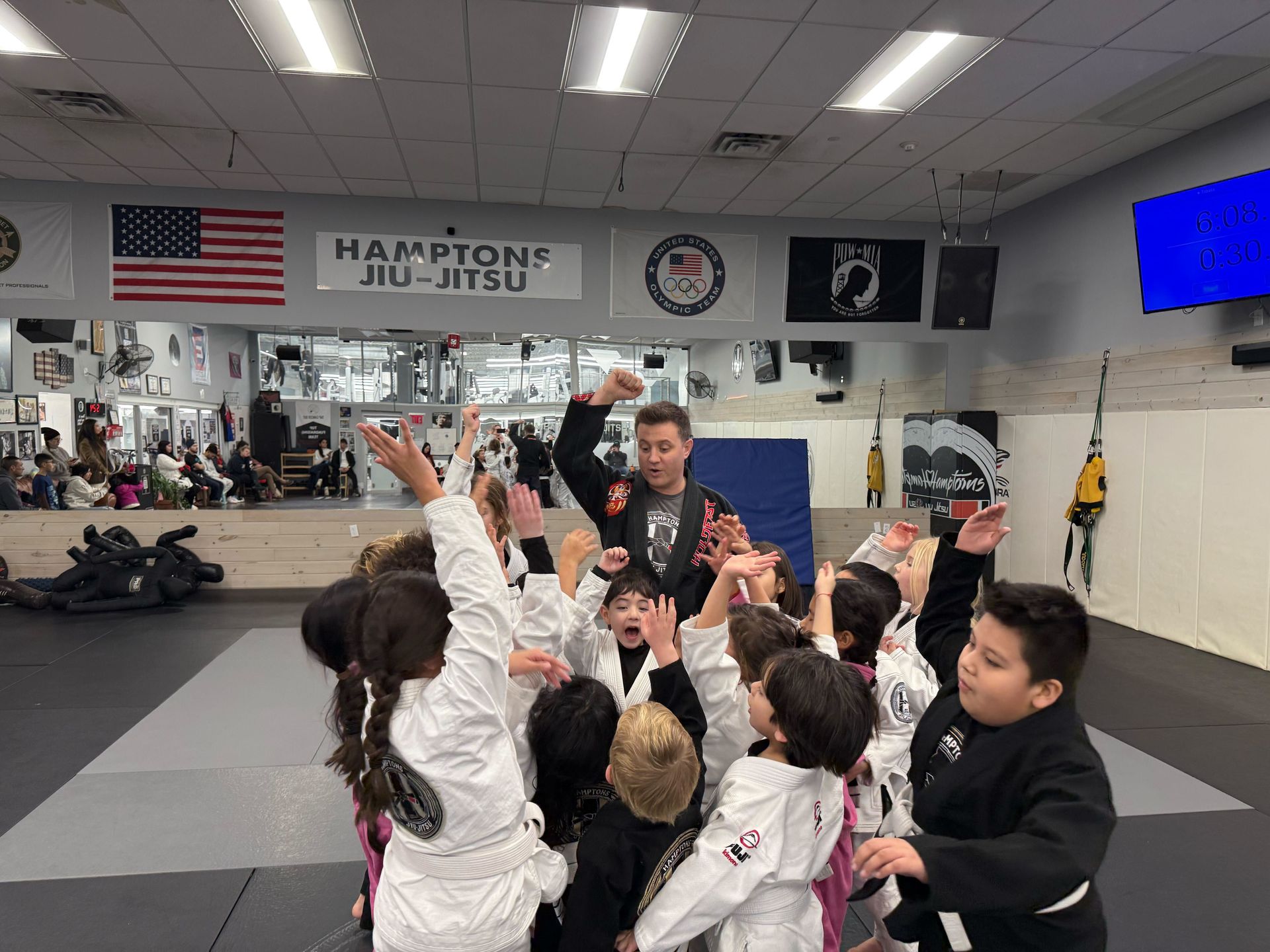
Most youth sports teach valuable lessons, but the structure often centers on games, points, and the pressure of performance on a specific day. In youth jiu jitsu, practice is the main event. Your child learns a skill, tests it safely, adjusts, and improves. That loop is where confidence comes from.
We also like that the learning is tangible. A child who struggles with frustration can practice taking a breath and resetting. A child who hesitates to participate can practice speaking up to a partner, starting a drill, and taking a turn. Small wins add up. Over weeks, you can see posture change, eye contact improve, and nervous energy settle into focus.
Research lines up with what we see on the mats. In recent parent-reported outcomes, 96.4 percent noticed improved confidence, 87.5 percent reported reduced anxiety, and 92.8 percent observed stronger commitment and mental flexibility. Those are big numbers, but the day-to-day version is simple: kids start believing they can handle hard things.
Physical benefits: Full-body athleticism that carries into everything
If you’ve watched kids train for a few classes, you’ll notice how varied the movement is. There’s no single “position” your child stays in for long. They crawl, bridge, shrimp, post, balance, grip, and change levels. That variety matters, especially for developing bodies.
Studies on martial arts programs show statistically significant improvements in coordination, balance, agility, strength, flexibility, and cardiorespiratory fitness for preschool and school-aged kids. We build those qualities into class on purpose, using age-appropriate games and drills that feel fun but are secretly building serious athletic foundations.
This is one of the most practical reasons parents choose martial art classes in Southampton: the fitness is comprehensive, not narrow. A child who improves balance and coordination in jiu jitsu often looks more confident in other activities too, from playground play to seasonal sports.
Mental benefits: Calm under pressure and better decision-making
Kids don’t just “get tough” by being told to toughen up. They build resilience by practicing it in a safe environment. Grappling is a controlled challenge: sometimes you’re on top, sometimes you’re stuck, sometimes you need to breathe and think.
In class, we coach kids through these moments. We teach them to:
- Pause instead of panicking
- Solve problems step by step
- Accept feedback without spiraling into embarrassment
- Keep effort steady, even when a drill feels tricky
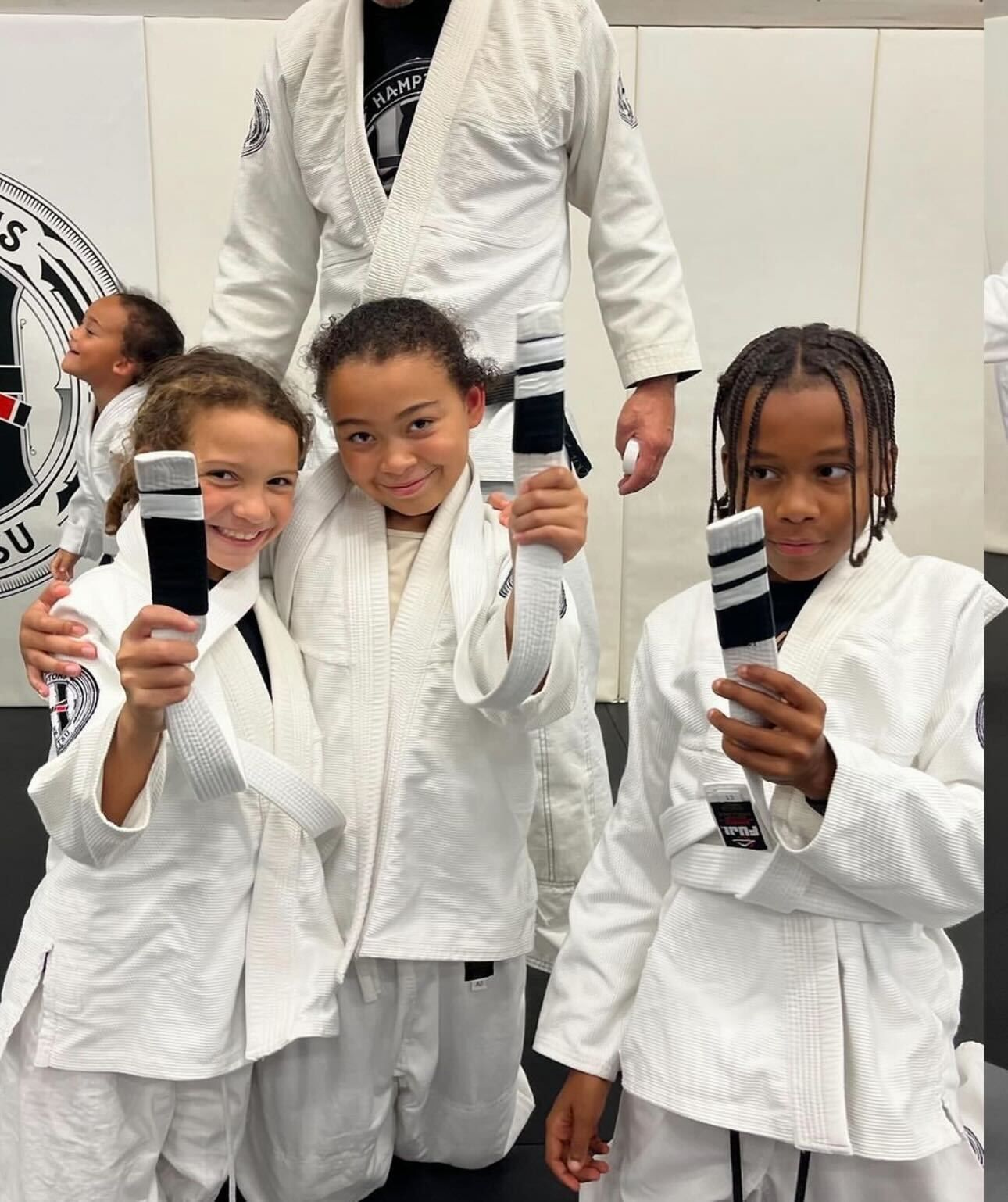
This is a big reason youth jiu jitsu helps with school and daily routines. Belt progressions also make goal-setting real. Kids learn that progress comes from showing up, listening, practicing, and being consistent. It’s not instant gratification, and honestly, that’s part of the point.
Social benefits: Confidence without ego, community without cliques
A common worry is whether a martial art environment becomes aggressive or overly competitive. Our goal is the opposite. We build a culture where kids learn to be assertive and respectful at the same time.
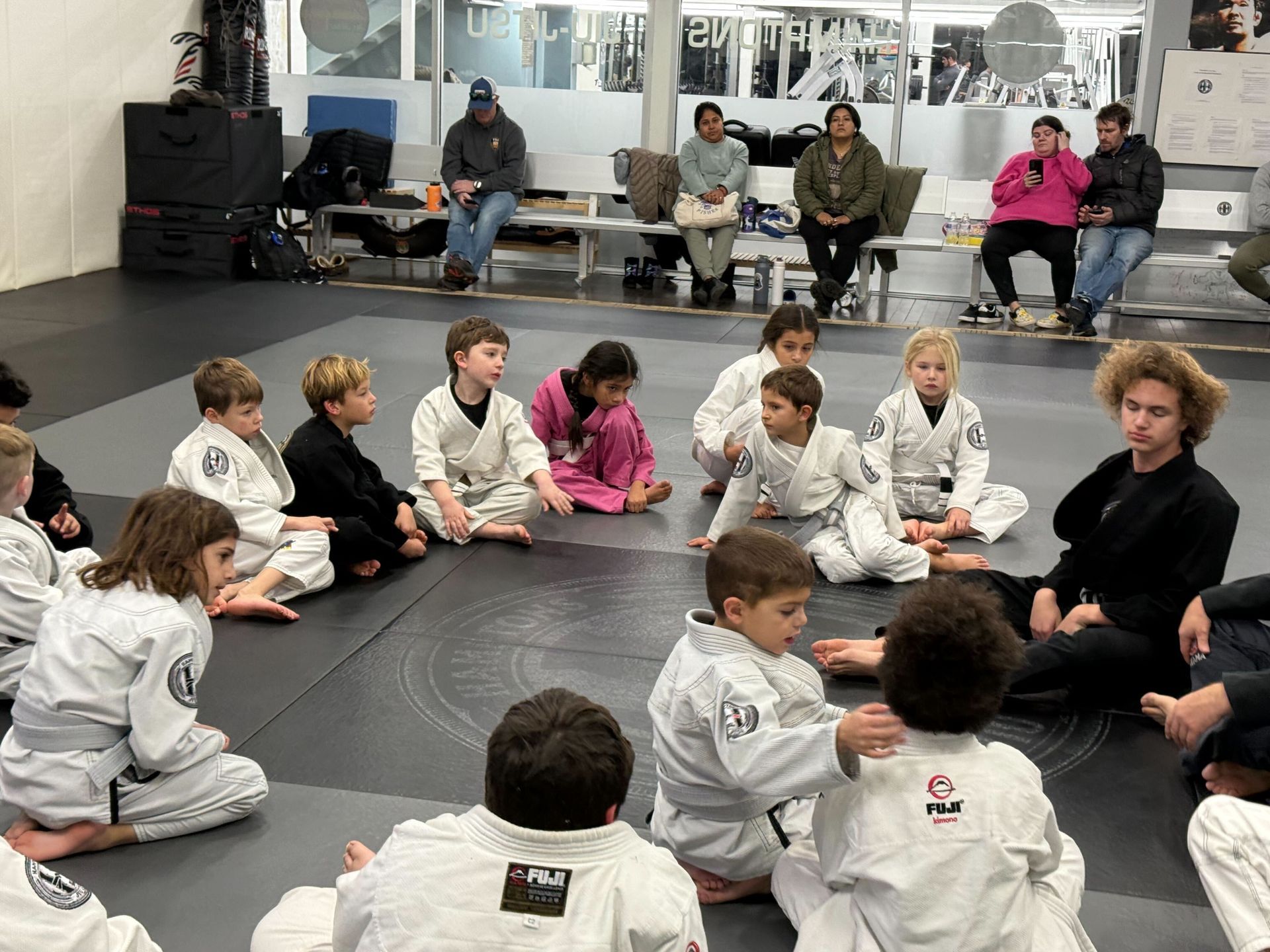
Training partners matter. Kids have to communicate, take turns, and learn how to win and lose without being unkind. That social practice is built into every class. It’s also why many families tell us their child finally feels “settled” socially here, especially if team sports have felt overwhelming.
Parent feedback in recent studies also points to a strong sense of community and mood improvements tied to consistent training. When kids feel they belong somewhere, behavior improves. Not magically, not overnight, but steadily.
Bullying, boundaries, and real-world self-defense
Southampton parents talk to us about bullying more than you might expect. Sometimes it’s overt, sometimes it’s subtle. Either way, kids need tools. Not just physical tools, but the confidence to set boundaries and the awareness to make safer choices.
Youth jiu jitsu teaches practical self-defense concepts that make sense for kids:
- How to fall safely and protect the head
- How to break grips and create space
- How to escape pins and get back to a safer position
- How to use leverage rather than strength
- How to stay composed enough to ask for help and get to an adult
We keep the training age-appropriate, controlled, and centered on safety. The goal is not to turn kids into fighters. The goal is to help your child feel capable, calm, and harder to intimidate.
Safety: Is youth BJJ appropriate for ages 4 to 12?
Yes, when it’s taught with structure, supervision, and age-specific expectations. Our youth program is designed around development stages, not a one-size-fits-all format.
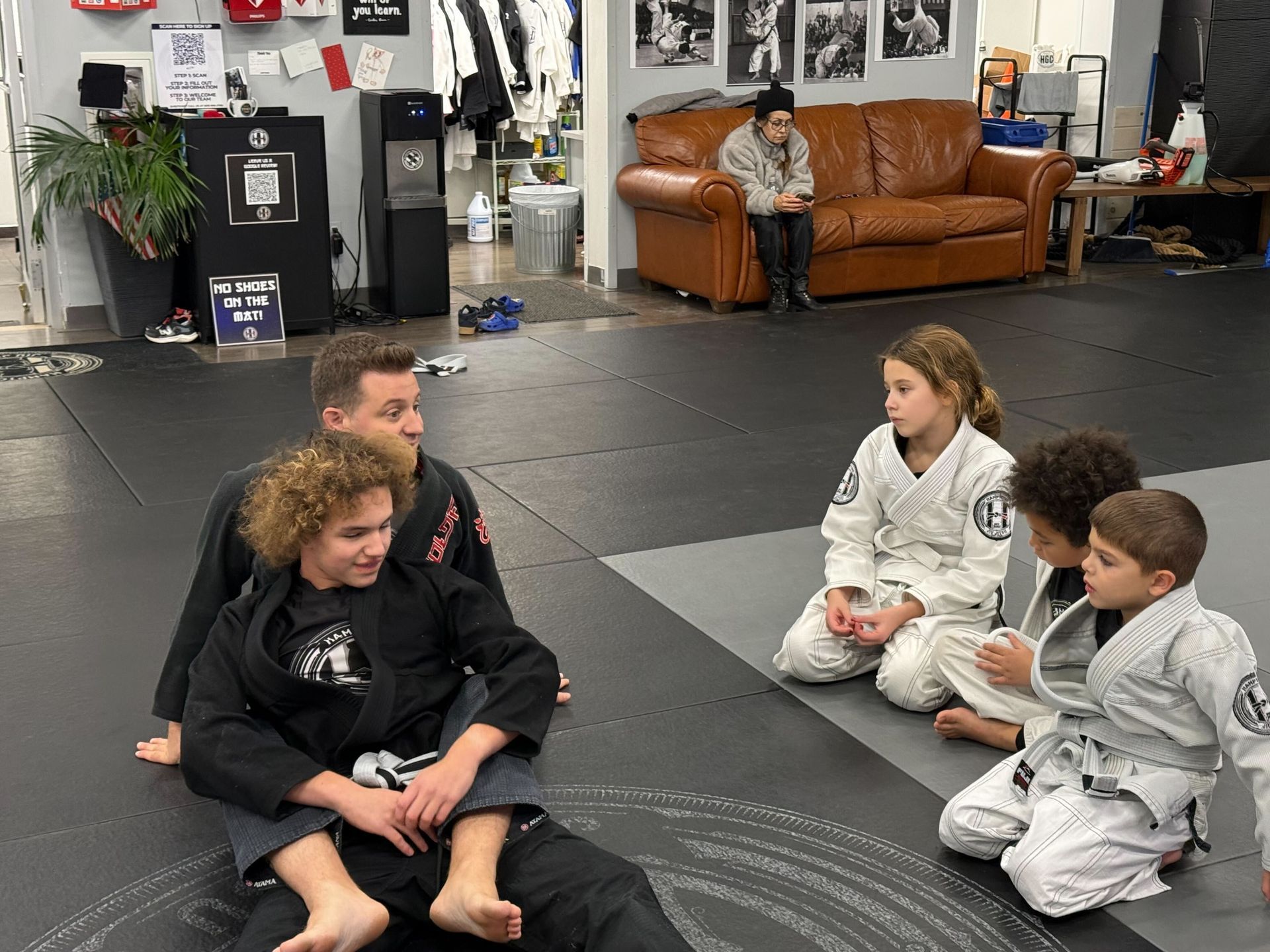
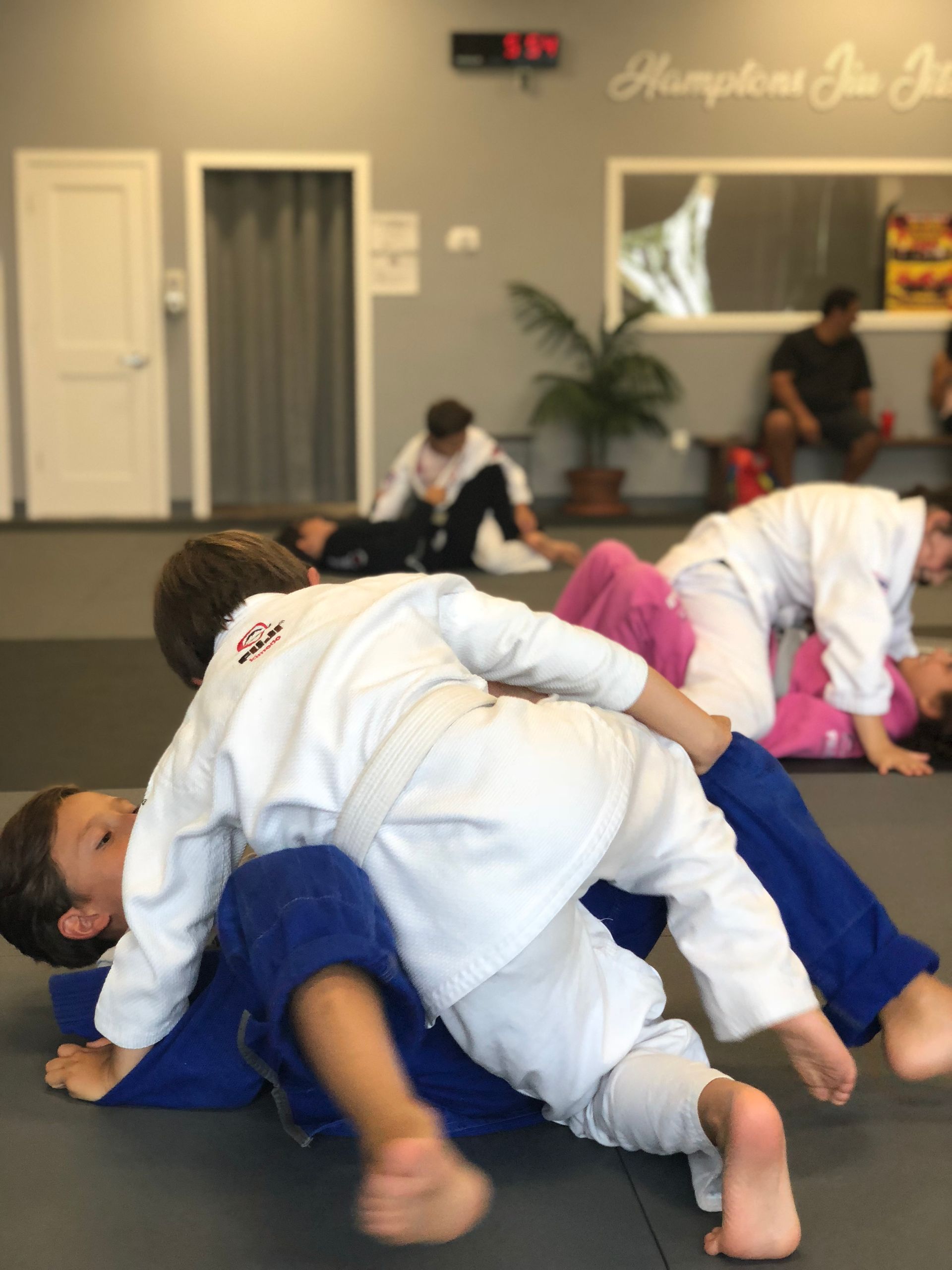
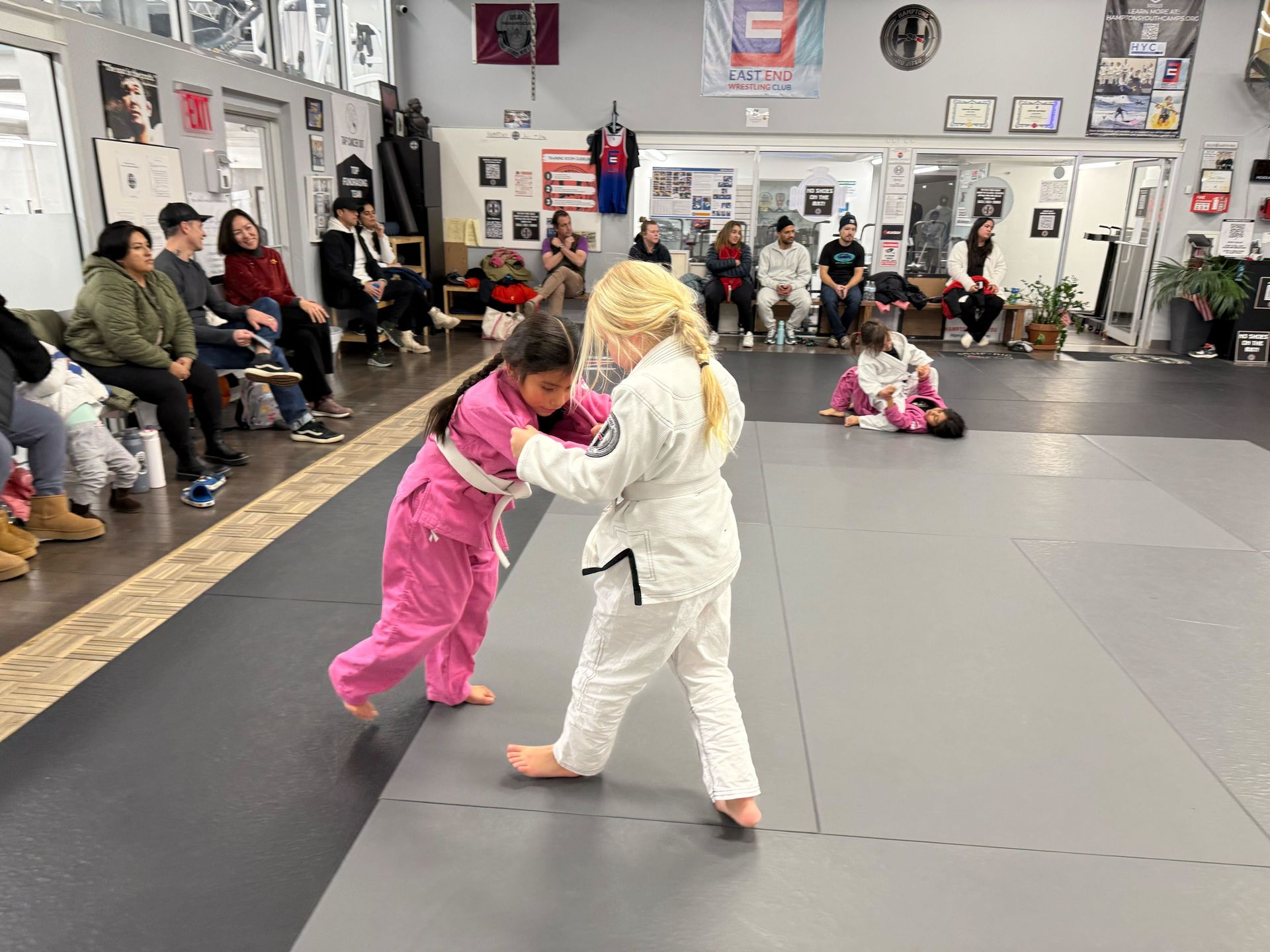
For younger kids, we focus on movement basics, listening skills, and simple positional games. For older kids, we add more technique detail, longer attention cycles, and more structured sparring, always with tight safety rules.
A few readiness signs we look for include comfort in a group setting, the ability to follow basic instructions, and enough stamina to participate without melting down halfway through. And if your child has a shy first day, that’s normal. We guide them in gently, without forcing.
What your child learns in our youth program
Our curriculum is built so kids can progress without feeling lost. Even when the techniques get more advanced, the foundation stays the same: posture, base, balance, and smart decision-making.
Here’s a snapshot of what youth jiu jitsu typically includes in our classes:
1. Movement fundamentals like shrimping, bridging, and safe falls to build body control
2. Positional skills so kids understand where they are and what “safe” looks like
3. Escapes and reversals that prioritize safety and composure under pressure
4. Submissions taught responsibly, with strict tapping rules and instructor supervision
5. Light, controlled sparring so kids can apply skills without chaos
This structure is one reason families searching for youth jiu jitsu in Southampton NY appreciate the consistency. Kids know what to expect, and that predictability helps confidence grow.
Schedule and time commitment: Making it work for busy Southampton families
A big advantage of training in a year-round program is that you can build routines that don’t collapse when a season ends. We keep the class schedule flexible so you can choose the frequency that fits school, homework, and family time.
Most families start with one to two classes per week. Some kids build up to more once they feel comfortable and start asking for extra mat time (which is usually a good sign). The key is consistency, not overload. We want training to add structure, not stress.
If you want specifics, the website includes the class schedule, and we’re happy to help you choose a pace that feels realistic.
Membership and getting started: Simple, supportive, and not intimidating
Starting something new can feel like a lot, especially for kids who worry about being the “new one.” We keep onboarding straightforward so your child can focus on enjoying class.
We offer a trial class so you can see how we teach and how your child responds to the environment. For gear, we’ll guide you based on what’s appropriate for the age group and class type. Many families start with basics and add equipment as their child settles in.
Our membership options are designed to support consistent training. We’ll talk you through what makes sense based on goals, schedule, and how quickly your child wants to progress. No pressure, just clear choices and a plan.
How youth jiu jitsu supports school performance and screen-time balance
Southampton families are juggling busy calendars and a lot of screen exposure, even for young kids. Training gives kids a physical outlet that also demands attention and listening. That combination is powerful.
We often see improvements in:
- Focus and follow-through, because techniques require steps in order
- Patience, because progress comes in layers
- Emotional regulation, because kids practice staying calm while challenged
- Sleep quality, because they’re moving their bodies in a structured way
It’s not a replacement for good parenting or good routines, but it’s a strong support system. Kids leave class pleasantly tired and mentally lighter. That’s a real win on a weekday.
Take the Next Step
If you want an activity that builds athletic ability, real confidence, and practical self-defense without the seasonal pressure, our youth program is designed for exactly that. We built it for Southampton kids who need structure, challenge, and a place to grow at their own pace.
When you’re ready, Hamptons Jiu-Jitsu is here to guide your child through a safe, disciplined path in youth jiu jitsu that supports both personal development and everyday life, not just “sports performance.”
Turn the techniques from this article into real-world skills by enrolling in a martial arts program at Hamptons Jiu Jitsu.
ACCESS OUR SCHEDULE
& EXCLUSIVE WEB SPECIAL
Secure your spot and get started today with our EXCLUSIVE offer!